
Duration: 09/01/2026 – 09/11/2026
Outline: Fairbanks – Denali National Park – Talkeetna – Palmer – Matanuska Glacier – Whittier – Seward – Kenai Fjords National Park
Keyword: Road trip; Alaska; Glaciers; Wildlife; Hiking; Fishing; Aurora; Fall Colors
Alaska has been on our travel list for a long time. It is one of those places that feels almost too large to understand from a map. We spent about 10 days traveling through Alaska, starting from Fairbanks and gradually making our way south through Denali, Palmer, Whittier and Seward. The original plan included quite a few outdoor activities, and, as usual, not everything went according to plan. Two of our tours were cancelled because of weather, but somehow those cancellations also gave us opportunities to do things we had not originally planned. This trip turned out to be much more than just sightseeing. We learned about Alaska native cultures, glaciers, ocean animals, gold mining, oil development, and even how historic Alaskans deal with the extreme changes between summer and winter. Here is our journey.
09/02: Fairbanks
We flew from Atlanta to Seattle and then continued to Fairbanks on Sep 1st. Fairbanks was our gateway to Interior Alaska, and it immediately felt very different from the Alaska I had imagined from pictures. It sits deep in the interior, surrounded by forests and rivers. We only had a short time in Fairbanks, but there was already plenty to learn.
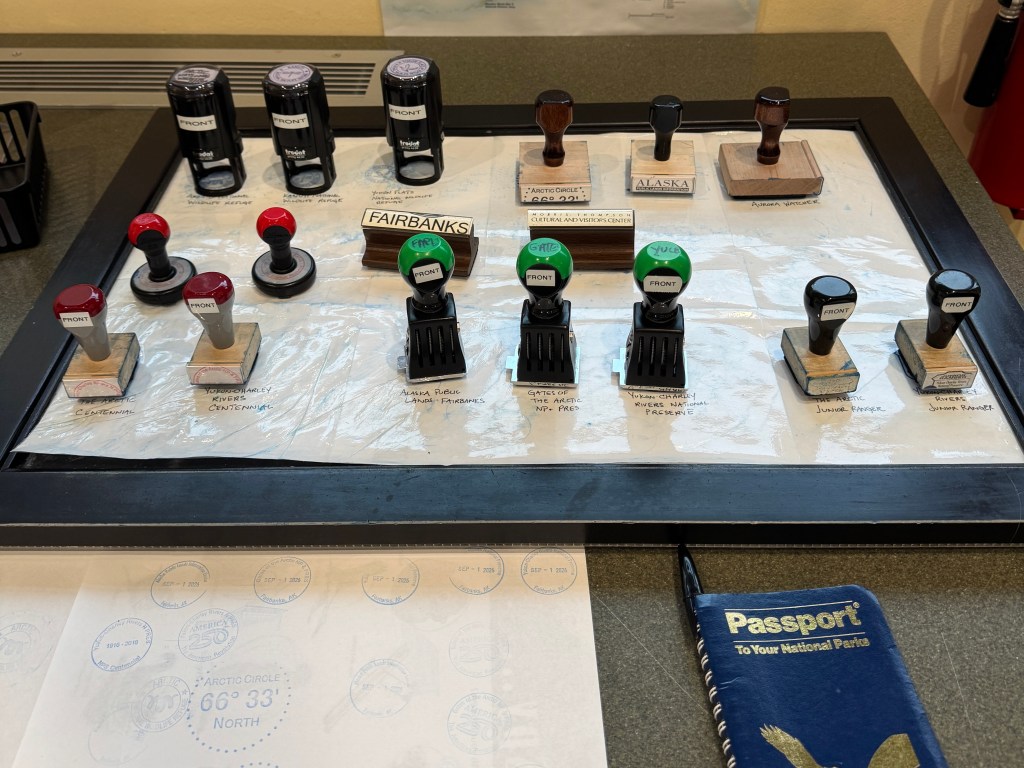
Our first stop was the Morris Thompson Cultural & Visitors Center, a free educational center in downtown Fairbanks. Alaska has an enormous amount of public land and an unusually large network of national parks, preserves, refuges and other protected areas. Some of these places are extremely remote and realistically may never be visited by a typical traveler. That is why I was excited to find that we could collect National Park Passport stamps even for places we probably would never physically visit in Alaska. It was a small thing, but I loved the idea.
The center also introduced us to Alaska native cultures, including the Athabascan people of Interior Alaska. One of the most interesting things I learned was how closely traditional life is connected to the seasons. Summer is the season for gathering food. Fish camps were traditionally established near rivers, where families could catch and process large quantities of fish to provide food for the winter. And then winter comes. The further north you go, the more dramatic the change in daylight becomes. Instead of simply getting slightly shorter days, daylight can disappear surprisingly quickly as winter approaches.
I also learned some interesting cultural beliefs surrounding animals. For example, there are traditional beliefs and restrictions surrounding bears and women of childbearing age in some Alaska Native cultures. I found these stories particularly interesting because they show that animals in traditional Alaska cultures were not simply viewed as wildlife, but were deeply connected to spirituality, food, survival and social customs. Another surprising discovery was the Arctic ground squirrel. During hibernation, its body temperature can fall below freezing.
There was also a lot of history to absorb. The United States purchased Alaska from Russia in 1867, and Alaska became the 49th state in 1959. Then came the oil era. The discovery of major oil fields around Prudhoe Bay in 1968 dramatically changed Alaska’s economy. Construction of the oil pipes began in the 1970s, and the pipeline was completed in 1977. Another interesting Alaska specific program is the Permanent Fund Dividend. Alaska uses investment earnings from its mineral revenues to provide annual payments to eligible residents. It is a very unusual example of how natural wealth has been incorporated into a state’s public policy.
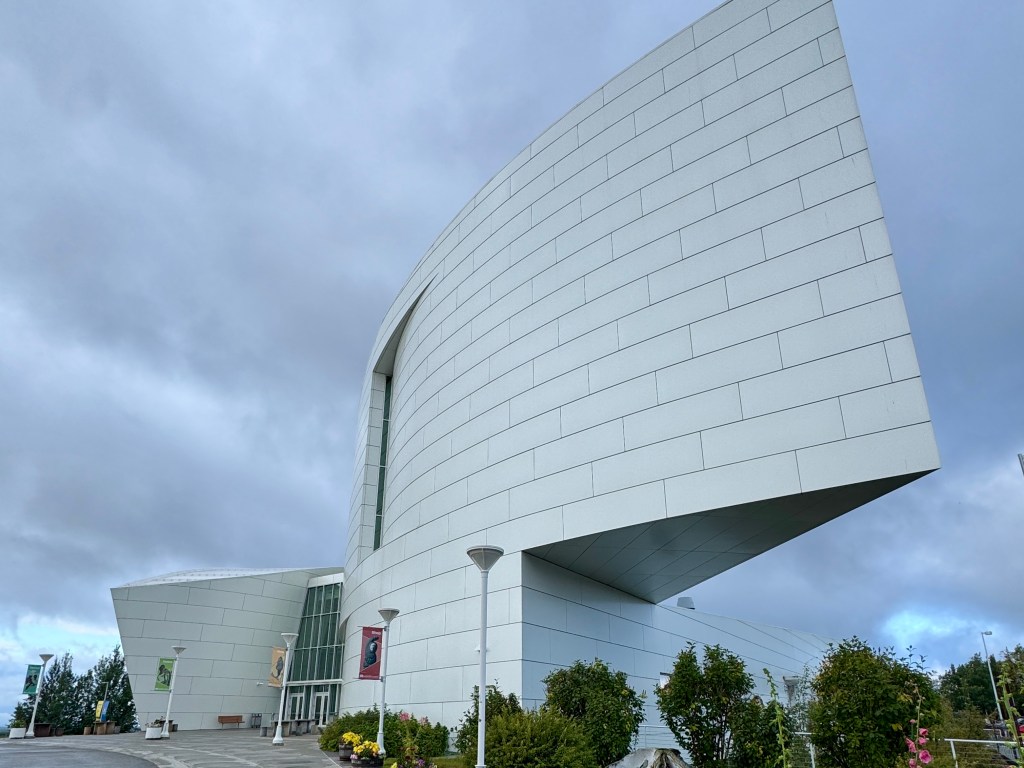
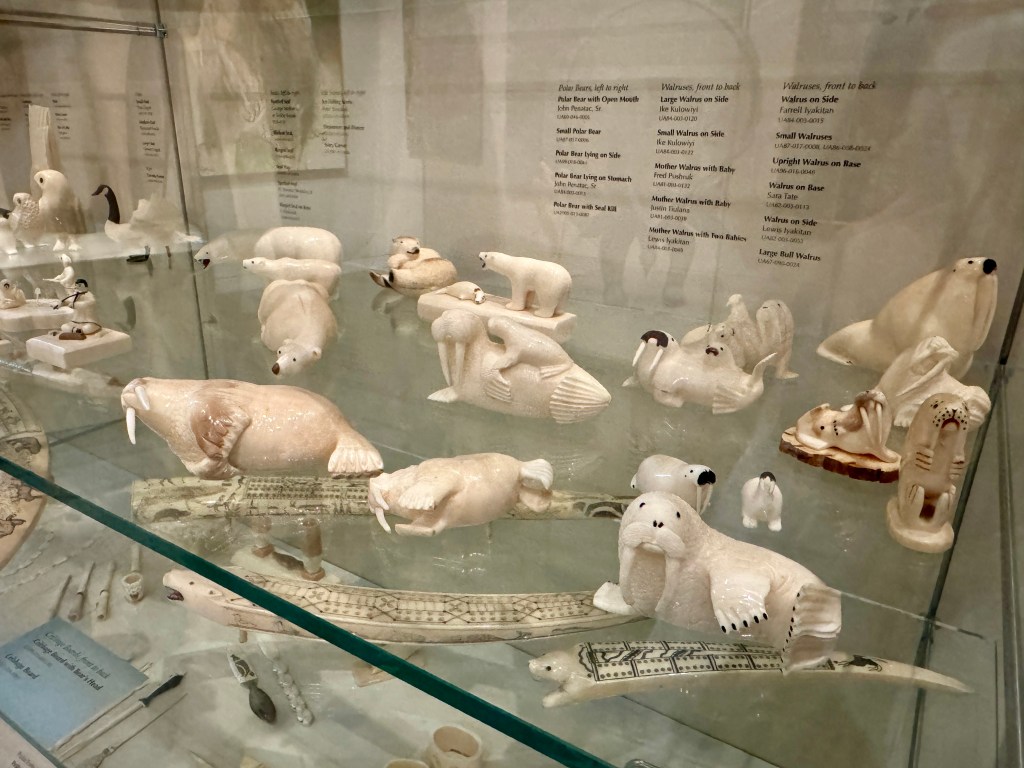
We also visited the University of Alaska Museum of the North. The Gallery of Alaska is organized around five geographic regions and combines natural history, wildlife, native cultures and Alaska’s more recent history. The museum also has an Alaska Native art gallery featuring everything from ancient ivory carvings to contemporary artwork.
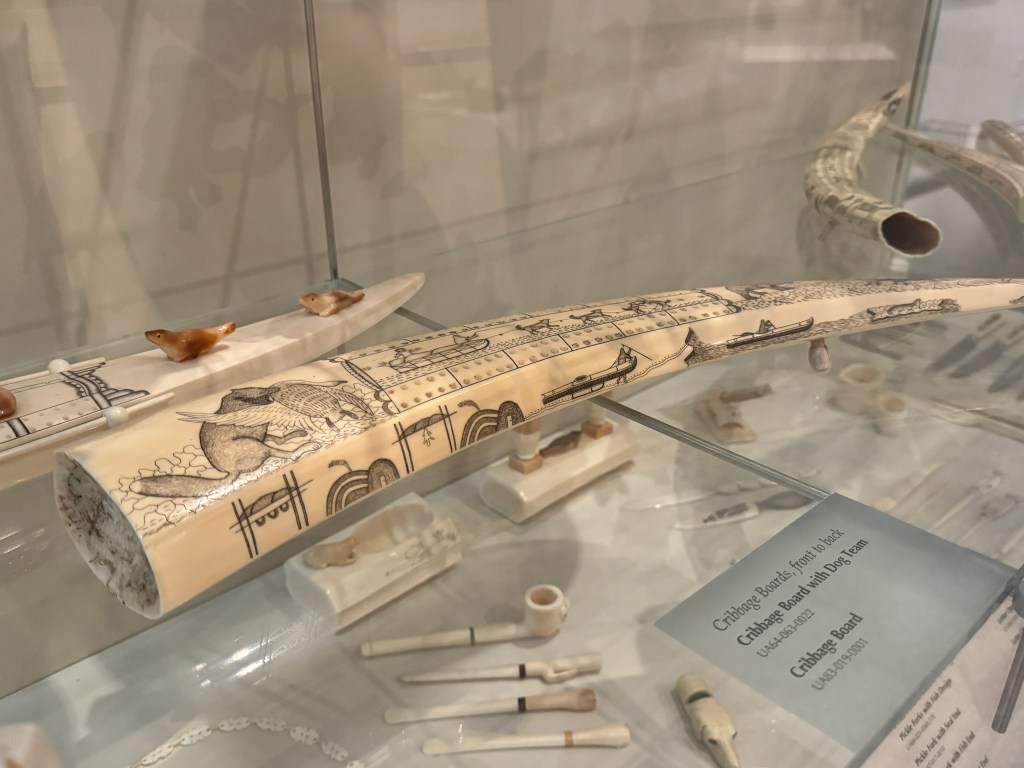
The ivory carvings were particularly interesting. Walrus ivory was traditionally an important material for Alaska Native artists. Many carvings depict animals and everyday life. Some were also made specifically for the tourist market because they were relatively easy to carry home as souvenirs.
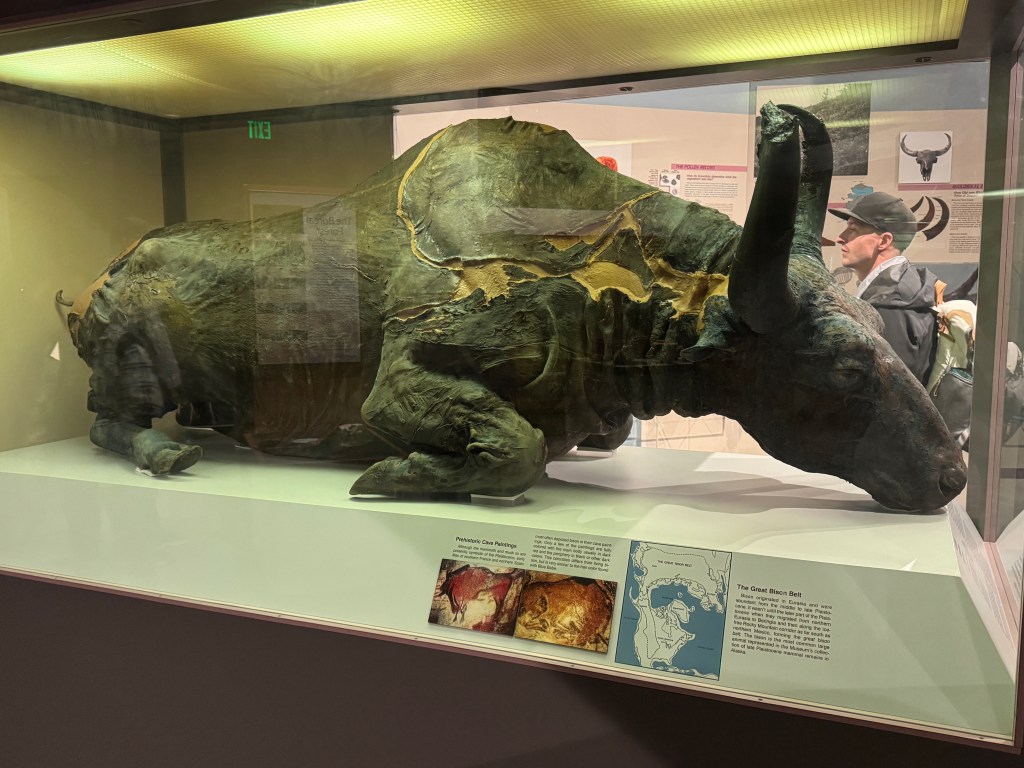
The museum also has exhibits about whale hunting, Yup’ik culture, the Gold Rush and Alaska’s natural history. One of the exhibits that caught my attention was the preserved “Blue Babe,” a remarkably preserved Ice Age steppe bison found in Alaska’s permafrost. The more time I spent in the museum, the more I realized that Alaska’s story isn’t just about glaciers and bears. It is also a story about people adapting to one of the most extreme environments in North America.
We also made a quick stop at North Pole, Alaska, mainly to visit Santa Claus House and the Antler Academy. It is touristy, but in a fun way. And one completely random stop: Costco. I was curious how much more expensive things would be in Alaska compared with Atlanta. Some products were surprisingly similar, but many groceries were more expensive. My guess is that transportation costs and the limited growing season play a role. I also noticed that the Fairbanks Costco carried some Alaska specific coffee and outdoor clothing brands that I don’t normally see at our Costco back home, including Marmot and Outdoor Research.
09/03: Aurora Hunting + Denali National Park
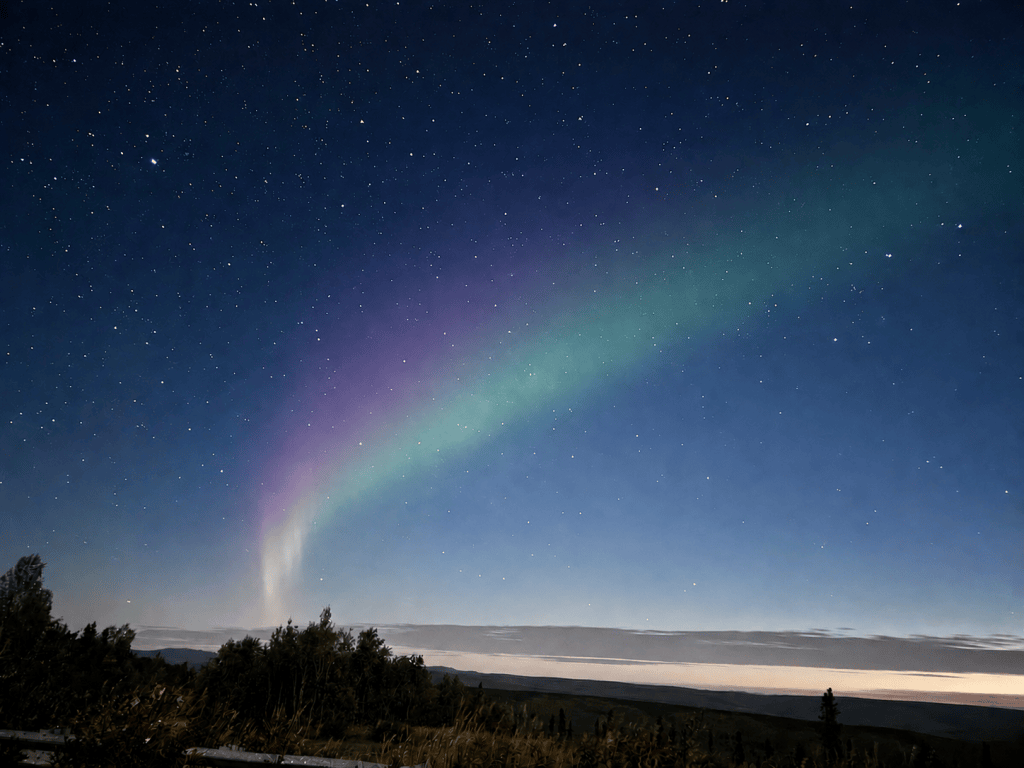
We were not originally planning to spend the night chasing the aurora. But when I woke up in the middle of the night, I checked one of the cameras set up by Poker Flat Research Range and noticed a faint aurora, even though the forecast suggested only a weak possibility of activity. That was enough to get us out of bed. We headed north toward Cleary Summit, hoping that we might catch a better view.
The KP index was very low, and the aurora was barely visible to the naked eye. But my phone camera captured much more than I could see, revealing a faint green glow in the sky that was almost invisible in person. It wasn’t a spectacular display, but the fact that we could see something on the screen that our eyes could barely detect made the late night adventure feel completely worth it.
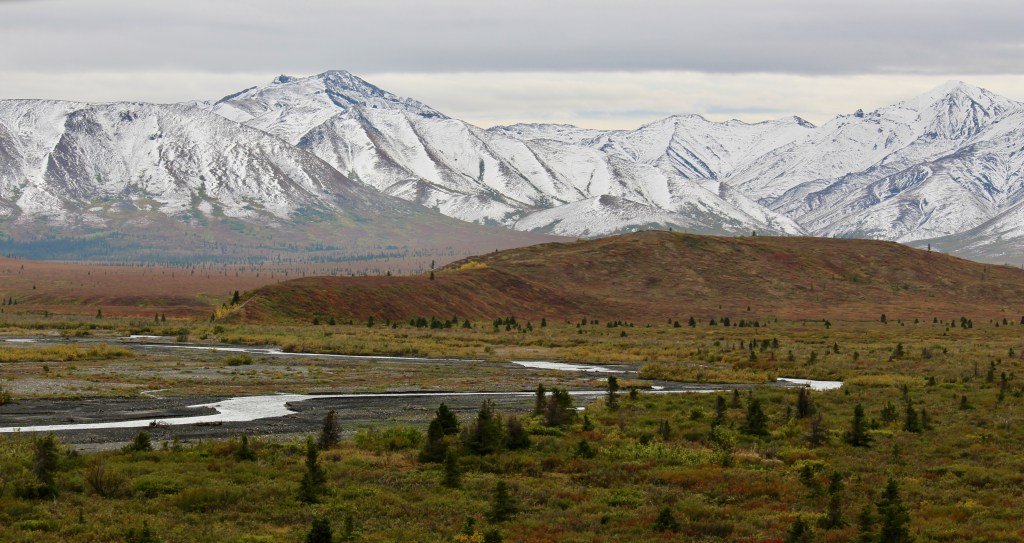
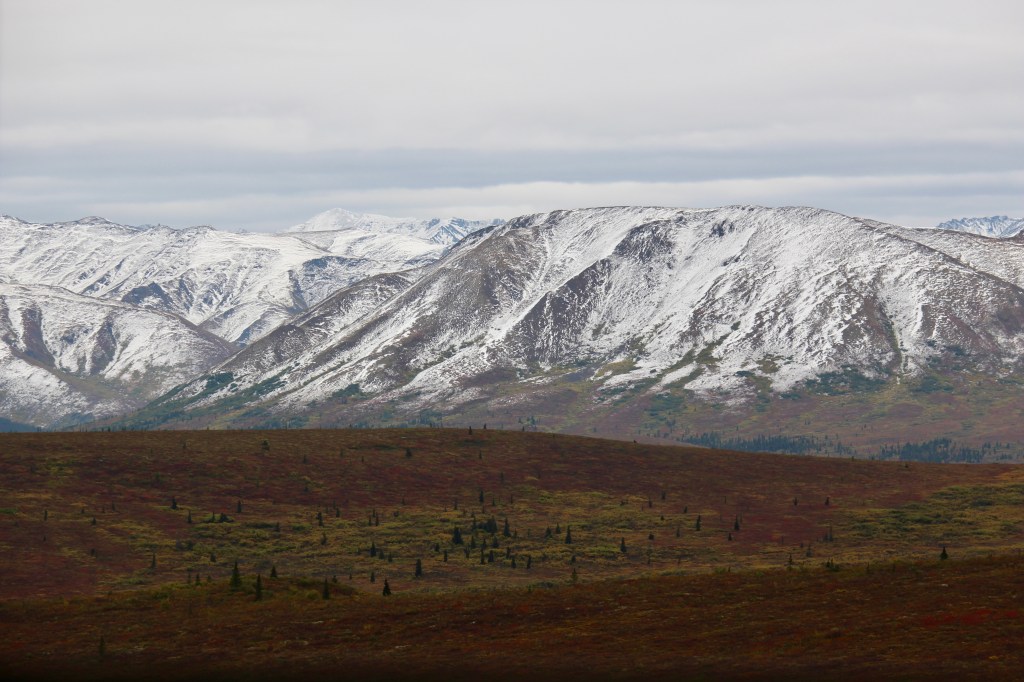
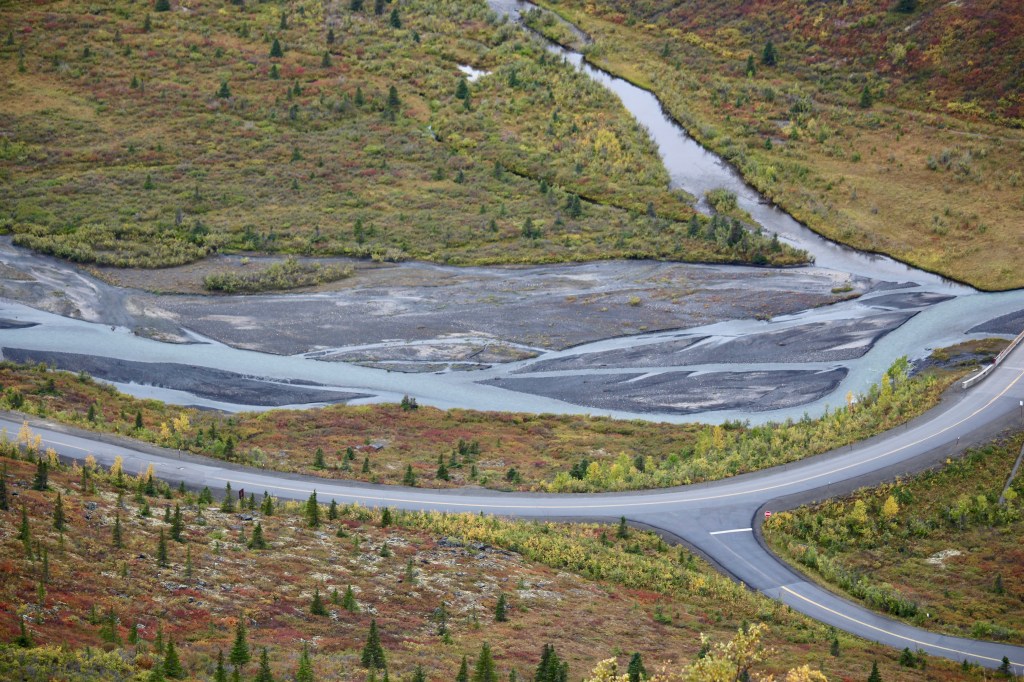
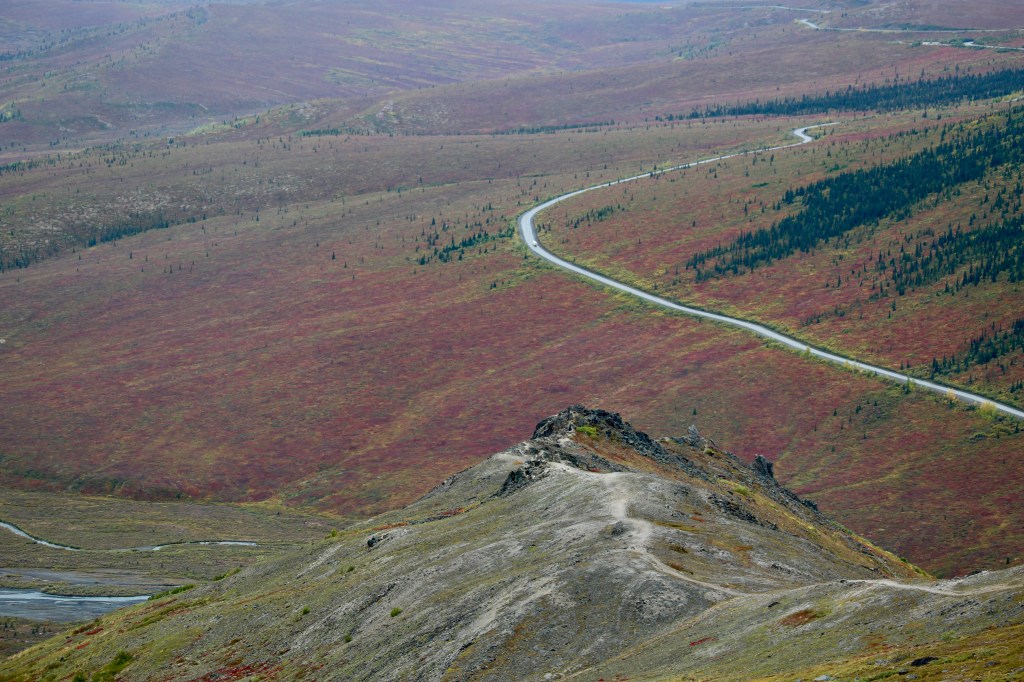
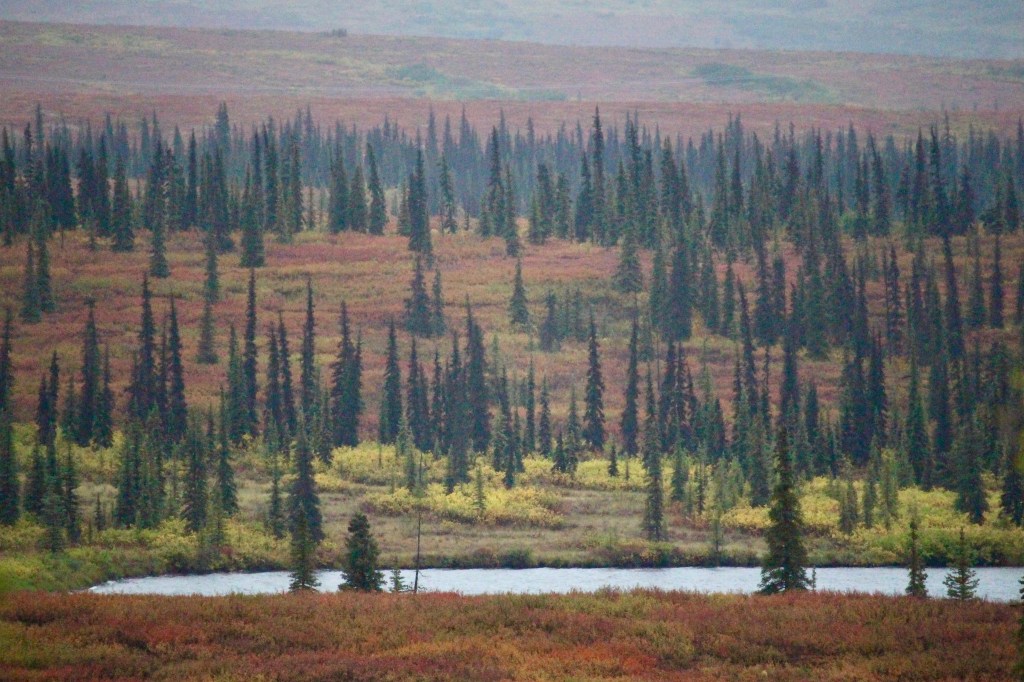
After a hot breakfast, we settle off to Denali. The drive from Fairbanks to Denali took roughly 2 to 2.5 hours. Denali National Park was one of the main reasons we came to Alaska, and we were lucky with the timing. It was peak fall color. The tundra was covered in shades of green, yellow and red, with snow covered mountains in the background. The combination was spectacular.
We decided to take the non-narrated transit bus rather than one of the narrated tours. The advantage of the transit bus is flexibility and lower cost. You can get off, hike and explore at your own pace. The downside is that there is no professional narration. At the time of our trip, Denali’s bus service was also affected by the ongoing Pretty Rocks landslide, so buses were traveling only as far as Mile 43 rather than the full 92 mile park road.
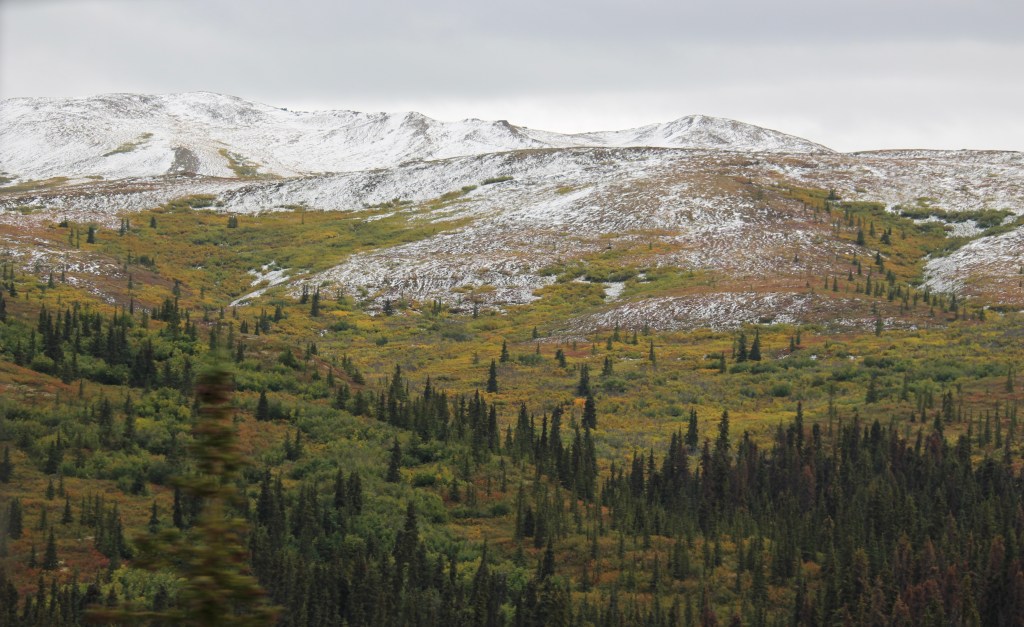
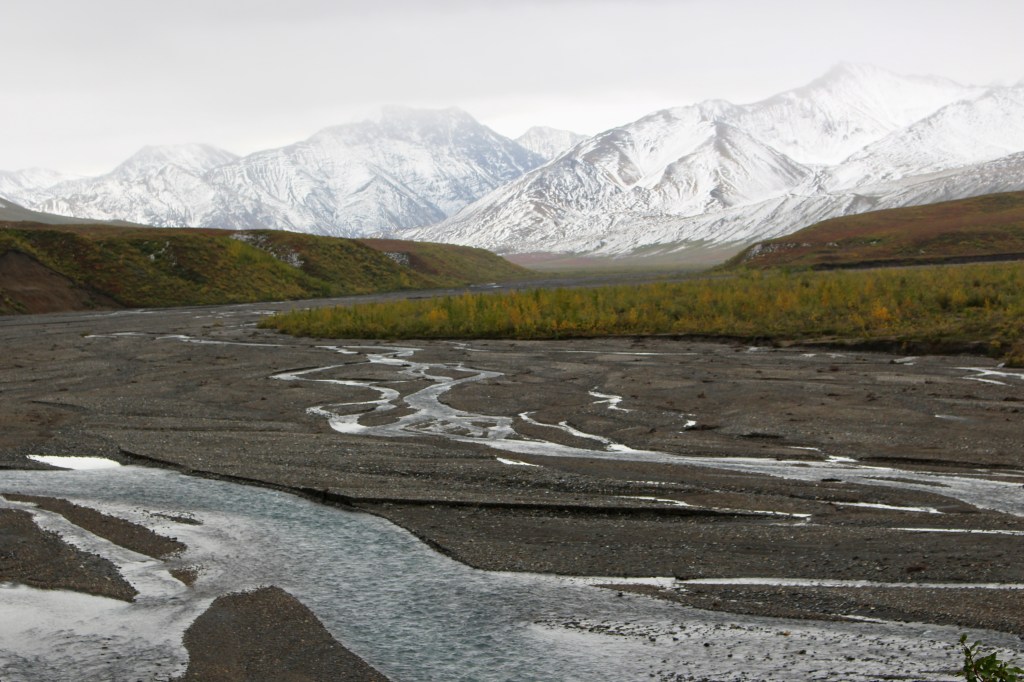
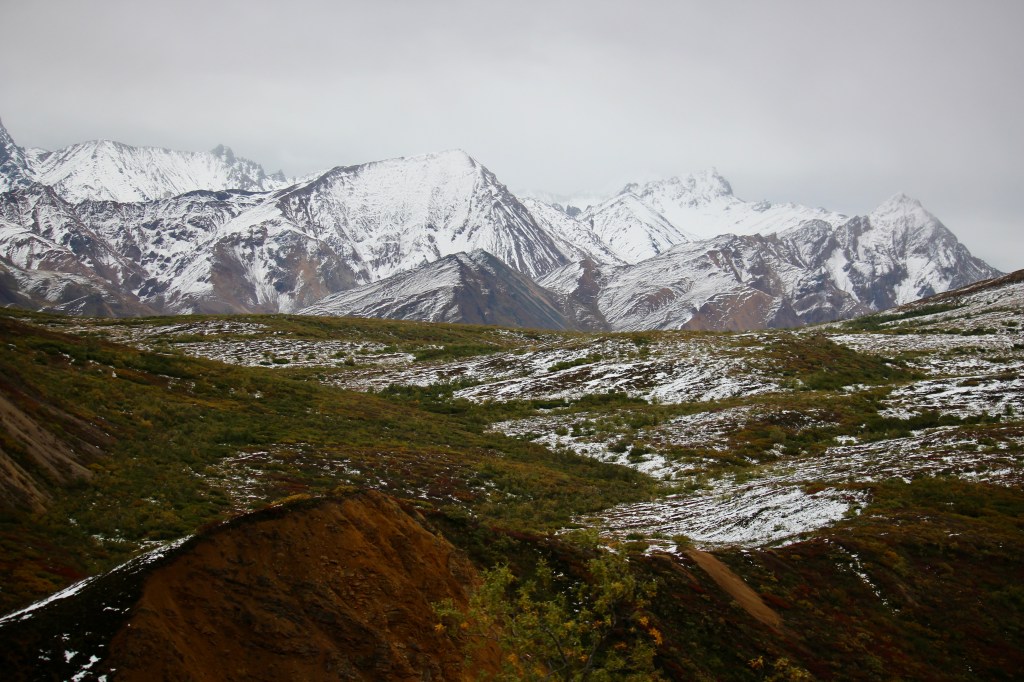
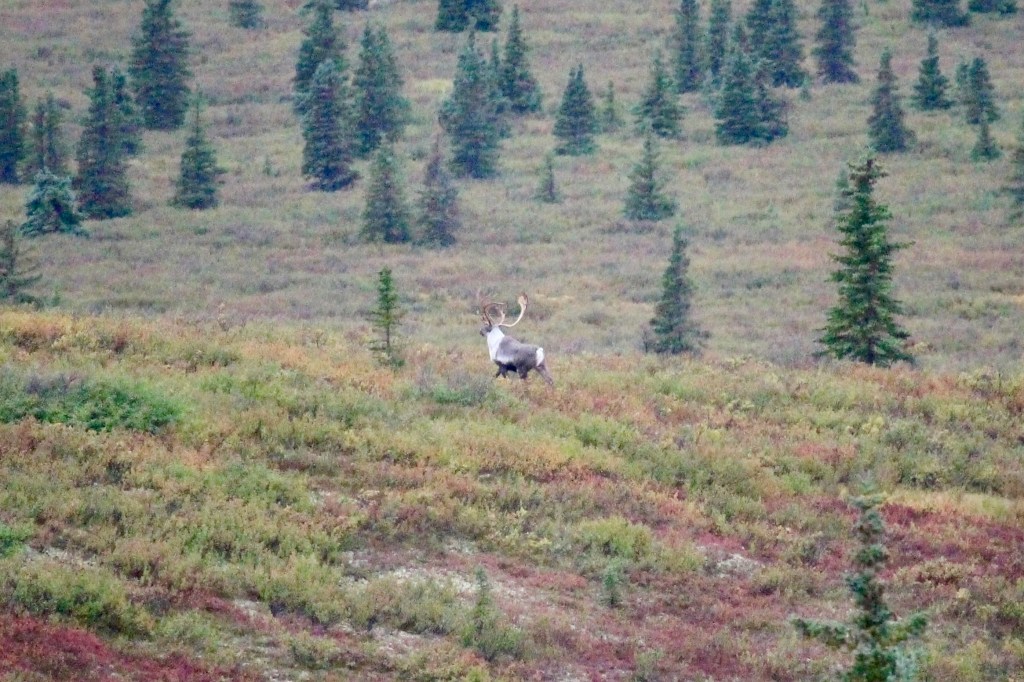
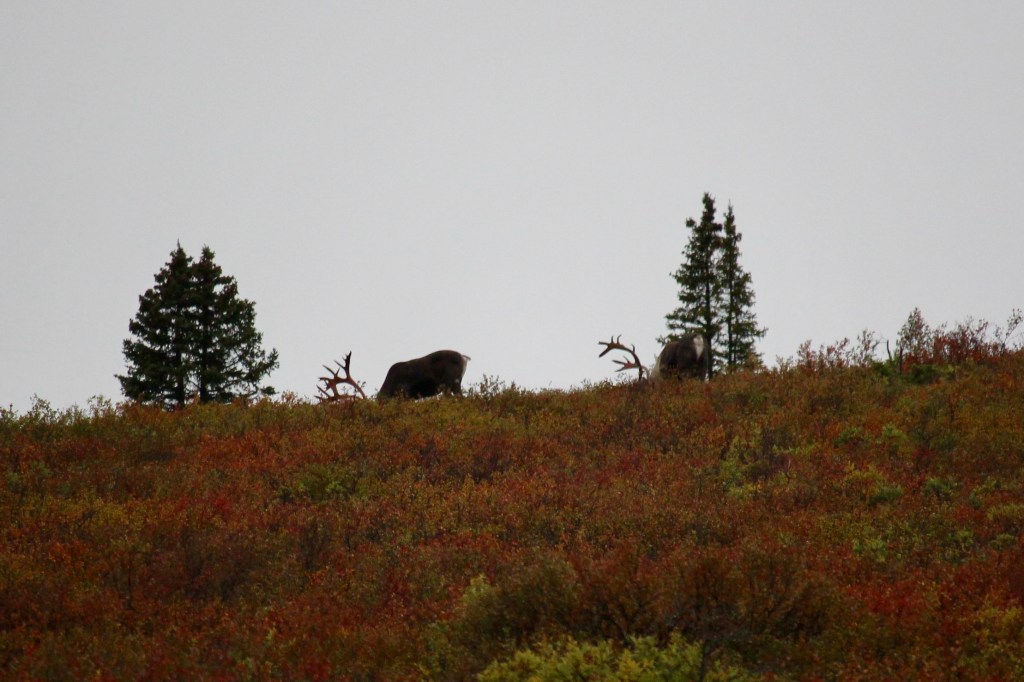
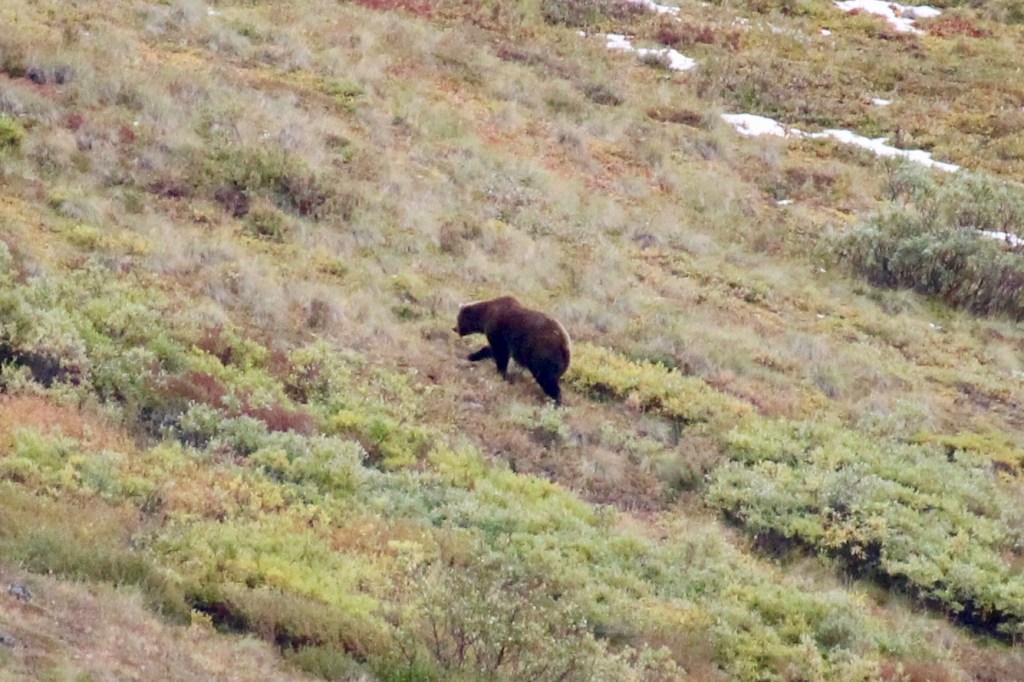
Our bus ride lasted about five hours. It was a rainy day, but we were extremely lucky to have another passenger on the bus who brought binoculars and was surprisingly good at spotting wildlife. We saw several caribou, one brown bear and one black bear. They were very far away. If wildlife is one of your main reasons for visiting Denali, I strongly recommend bringing binoculars. A camera with a long zoom is also very useful.
09/04: Denali National Park – Savage Alpine Trail
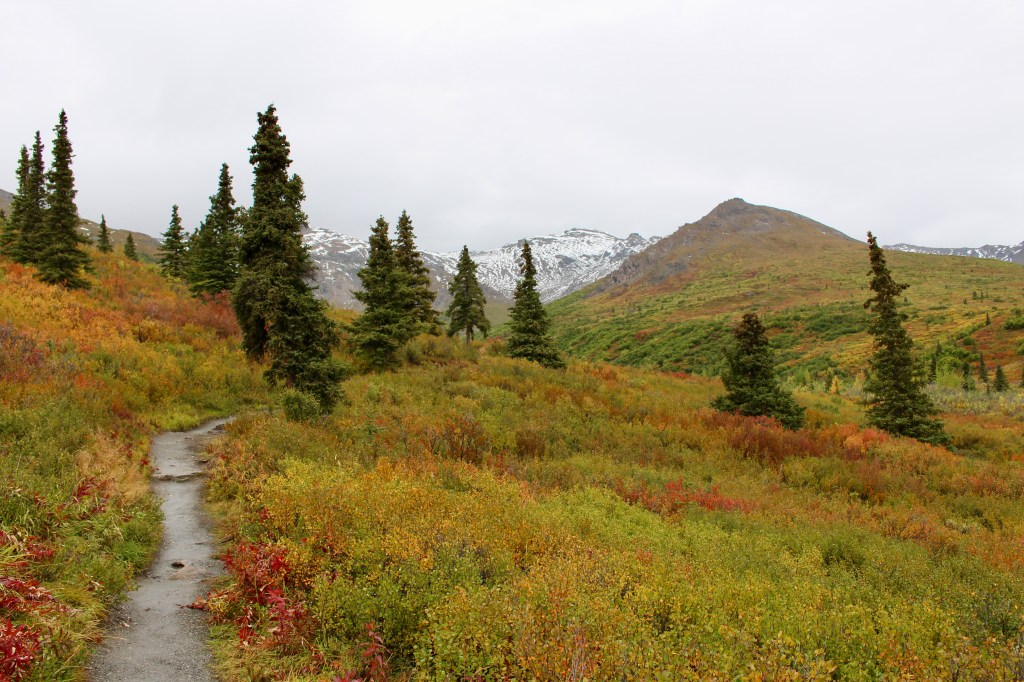
We spent another full day in Denali and decided to hike the Savage Alpine Trail. We started from Mountain Vista (Mile 13) and hiked toward Savage River (Mile 15), using the park’s free shuttle to get to the trailhead. The shuttle is the easiest way to reach this area because parking around Mountain Vista and Savage River is limited. The hike was around 4.5 miles for us and included about 1,500 feet of elevation gain. It was moderately strenuous, but the bigger challenge was the exposure and the wind near the higher sections.
We had forgotten to bring bear spray. I would definitely recommend carrying bear spray when hiking in Alaska, especially on quieter trails. Just three days earlier, a bear had been reported on this trail, and the trail had been temporarily closed. Since we started relatively early, there were very few people around us at first, which made us a little nervous. We continuously made noise and stayed alert as we hiked. Once we gained more elevation, we began encountering more hikers, which made us feel a lot more comfortable.
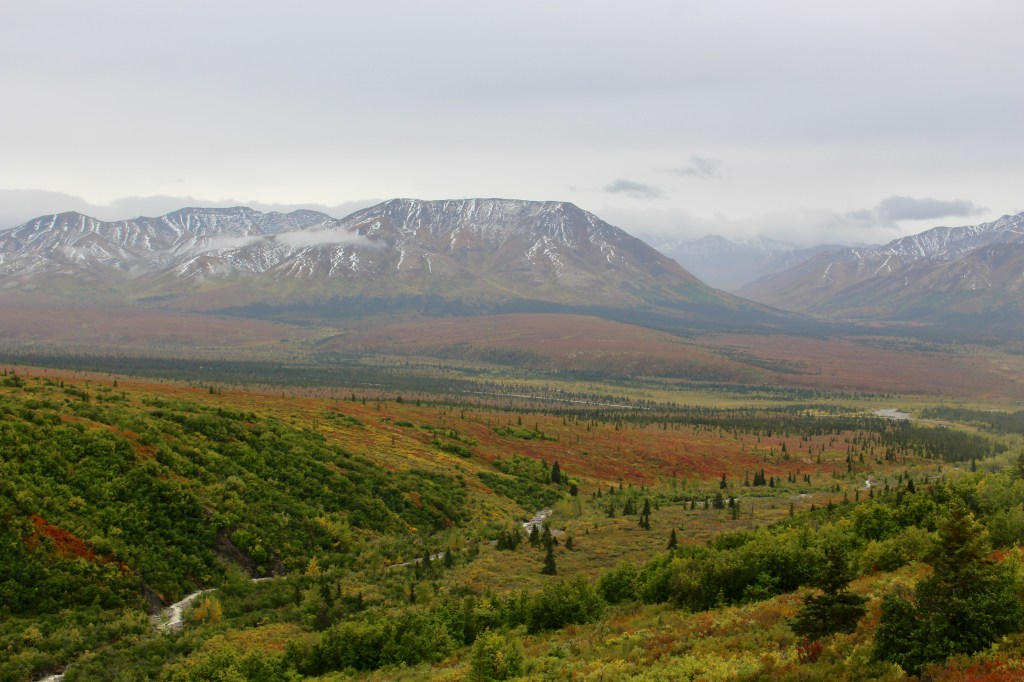
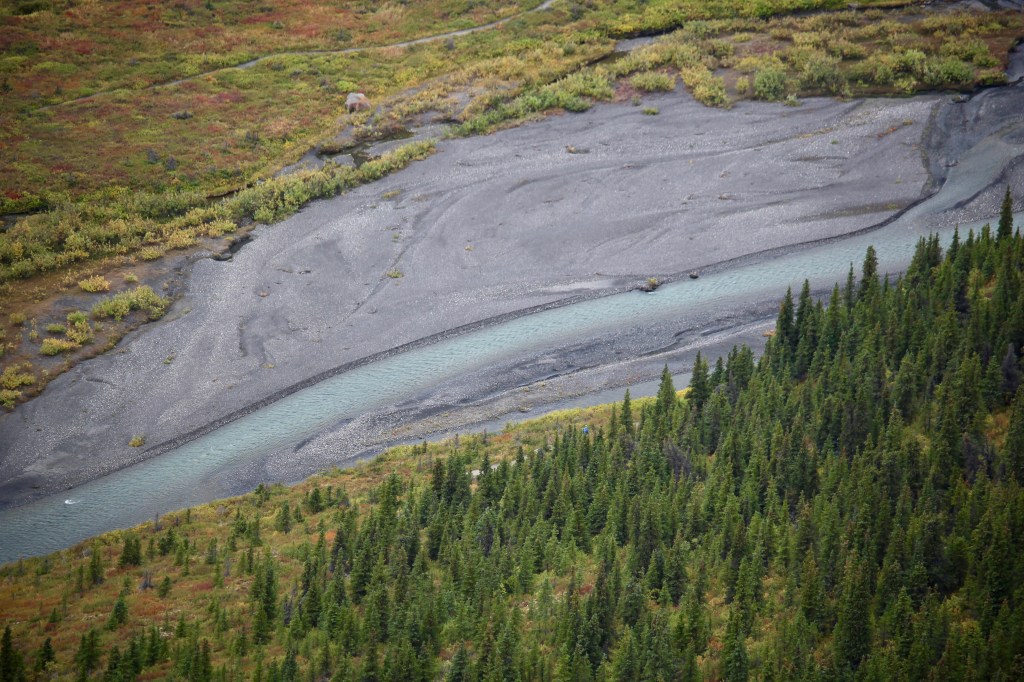
The view from the ridge was absolutely worth the effort. The fall colors were everywhere, and the combination of red tundra, green forest and snow covered mountains was probably one of my favorite landscapes of the entire trip. When we finished at Savage River, we wandered around the area for a little while before taking the shuttle back to visitor center.
Denali also has an interesting conservation history. The Dall sheep is the symbol of the park, and its protection is closely tied to the park’s origins. Charles Sheldon, a naturalist and hunter, became deeply concerned about the impact of market hunting on Dall sheep populations. His efforts helped build support for stronger protection of the area, eventually leading to the establishment of Mount McKinley National Park in 1917. The park was renamed Denali National Park and Preserve in 1980.
09/05: Denali -> Talkeetna -> Palmer
The drive from Denali to Palmer would take around 3.5 hours without stops. Unfortunately, it was rainy again, so we missed some of the scenery along the highway, including what would have been opportunities to see the Alaska Range.
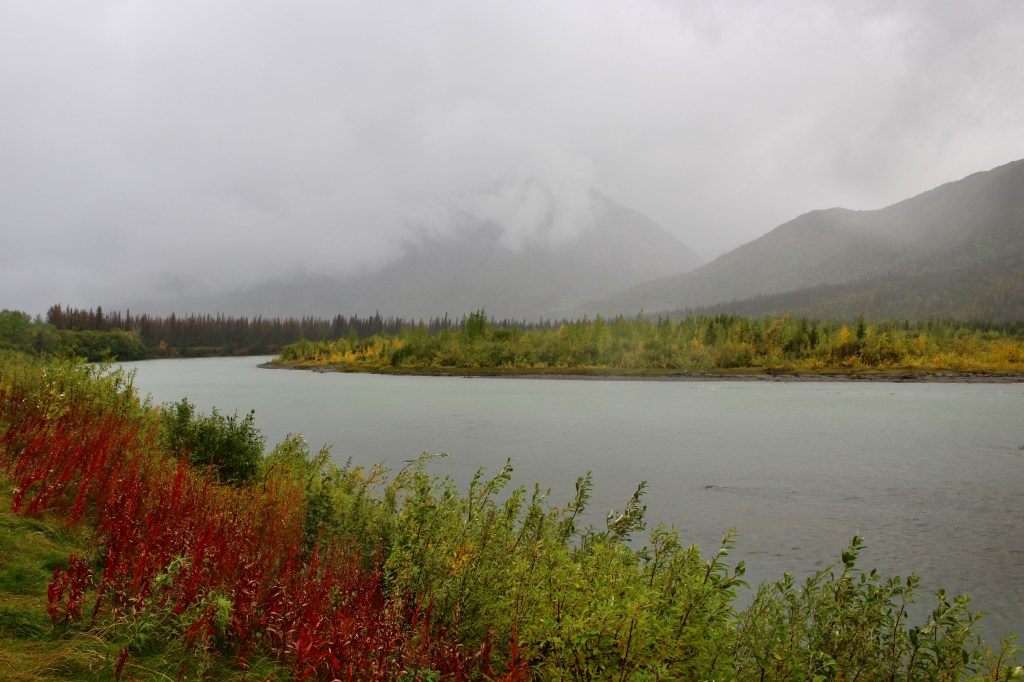
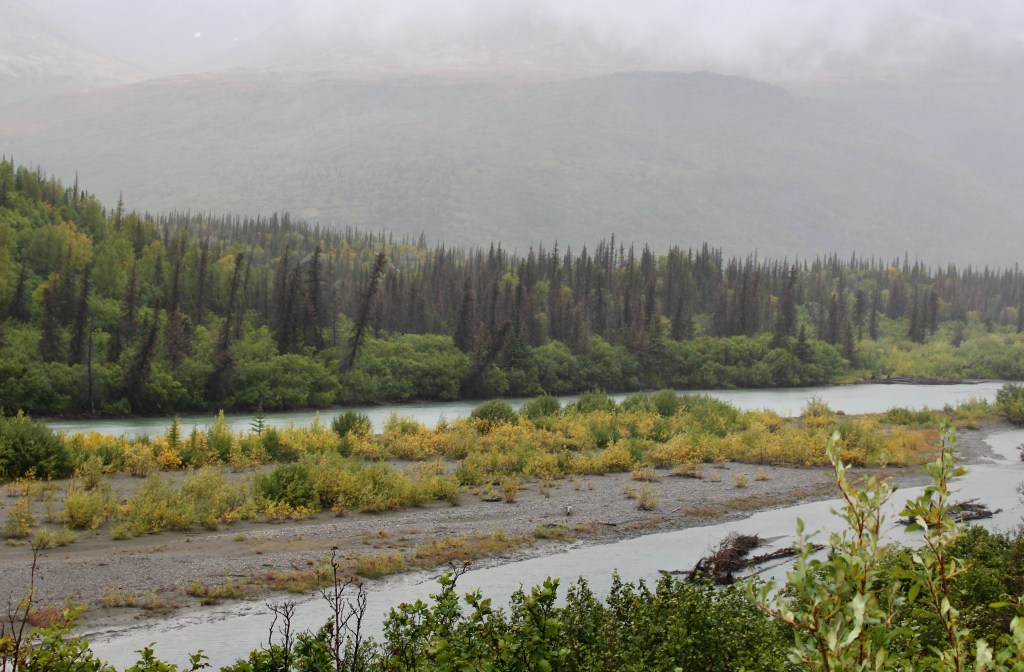
But we made a stop in Talkeetna, and I’m glad we did. Talkeetna is a tiny town, but it has a very distinctive personality. It is strongly connected with Alaska’s mountaineering culture because climbers heading toward Denali have historically passed through Talkeetna before heading into the Alaska Range. We walked around the small downtown area, visited several gift shops, and looked at local artwork and Alaska native made products.
One of the more unusual things we discovered was birch syrup. Alaska has extensive stands of paper birch, and local producers collect birch sap in the spring and boil it down into syrup. It looks similar to maple syrup, but the flavor is quite different. We stopped at Alaska Birch Syrup & Wild Harvest and tried some local products. There are also many wild berries growing in Alaska, including berries that are important food sources for wildlife. We tried a wild berry flavored ice cream, and it was surprisingly good.
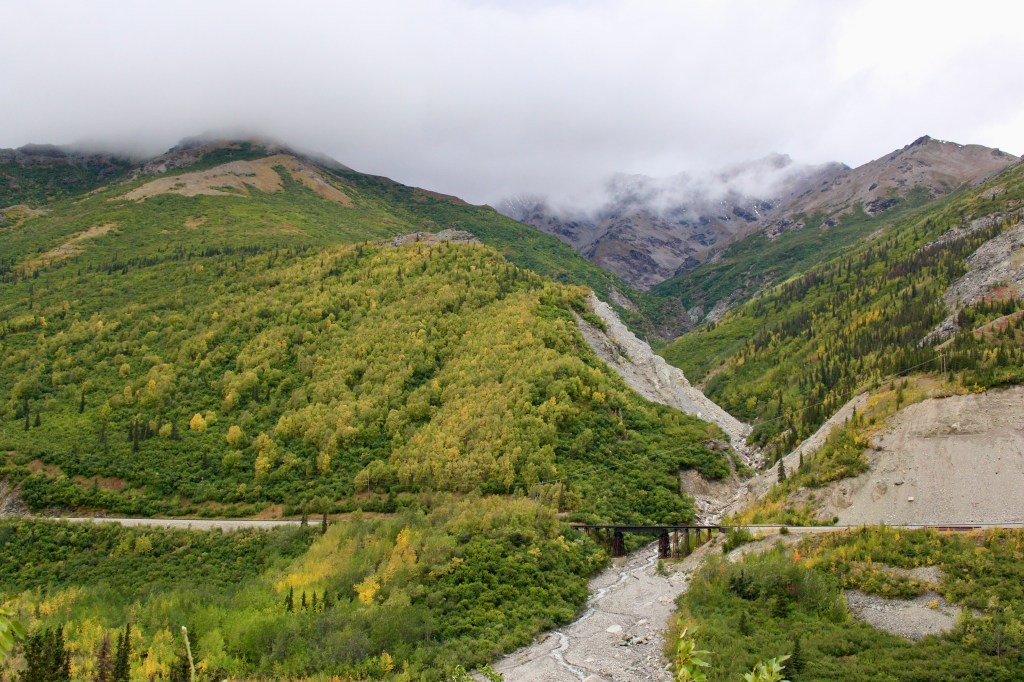
While driving from Denali to Palmer, we saw the Alaska railroad several times running alongside the highway. I had seen pictures of the railroad before, but seeing the train traveling through the middle of the Alaskan wilderness was still pretty cool. In some places, the tracks ran through forests and wide valleys with mountains in the background. It felt like such a typical Alaska scene.
09/06: Matanuska Glacier Advanced Trek
This was one of the highlights of the entire trip. Matanuska Glacier is located along the Glenn Highway, roughly one hour from Palmer and about two hours from Anchorage. There are several companies offering guided glacier experiences in the area. We chose NOVA’s Advanced Glacier Trek. Our tour lasted about six hours, with a maximum group size of eight people. NOVA also offers shorter glacier tours and more advanced climbing oriented experiences.
We started at the NOVA camp, where our guide helped us put on all the equipment including helmet, glacier boots, crampons, harness and other glacier safety equipment. They recommended wearing layers, and we were very glad that we brought an extra insulation layer. The glacier itself wasn’t necessarily freezing, but the wind made it surprisingly chilly.
After the equipment setup, they drove us about 20 minutes to the glacier access point. There is a separate entrance fee for Matanuska Glacier because the access area is managed separately from the tour operator, so that fee was not included in our tour.
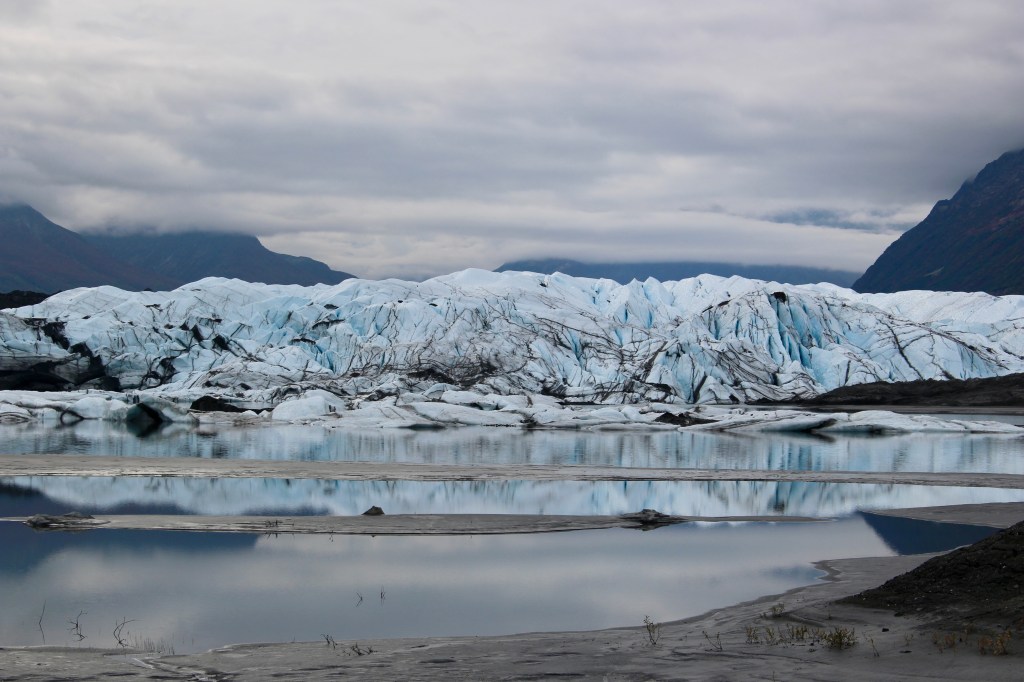
Walking on a glacier feels completely different from looking at one from a boat or viewpoint. Our guide explained how glaciers form, why some glacier ice looks intensely blue, and how the texture of the ice changes depending on its density and the way light travels through it. The guides were also very safety conscious. They constantly checked the route and adjusted the path when necessary. Some sections of the glacier had crevasses and uneven surfaces, so having experienced guides made a huge difference.
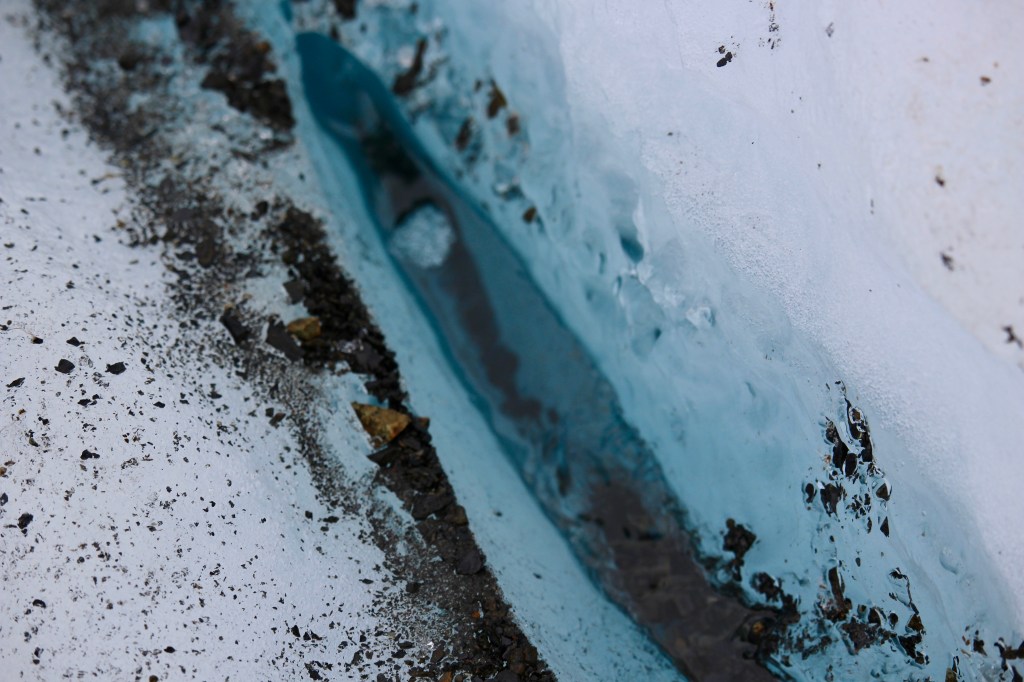
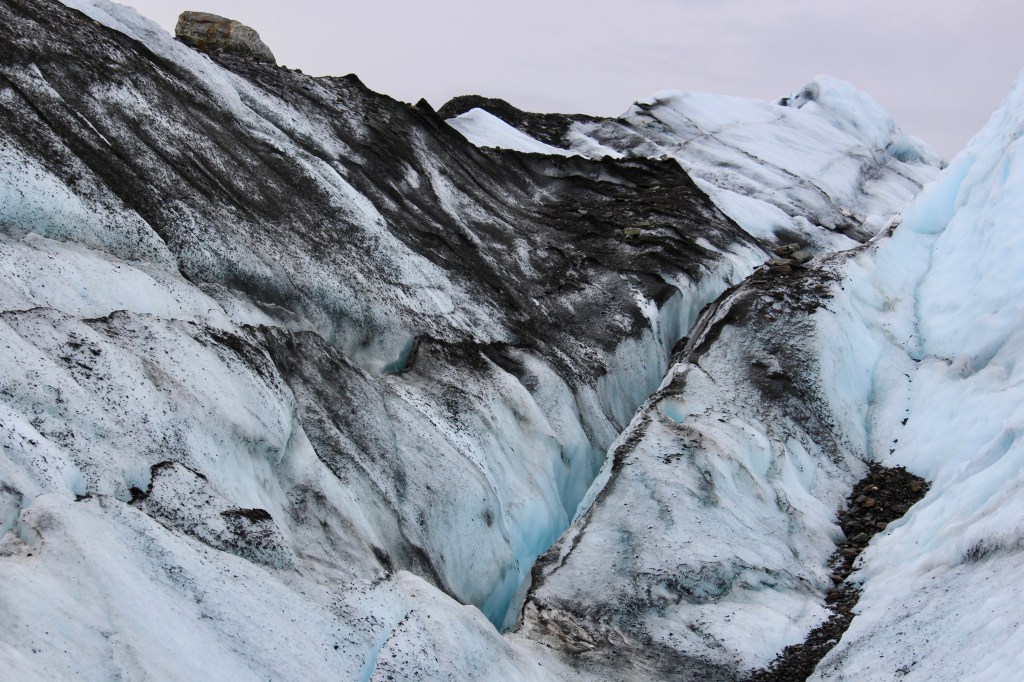
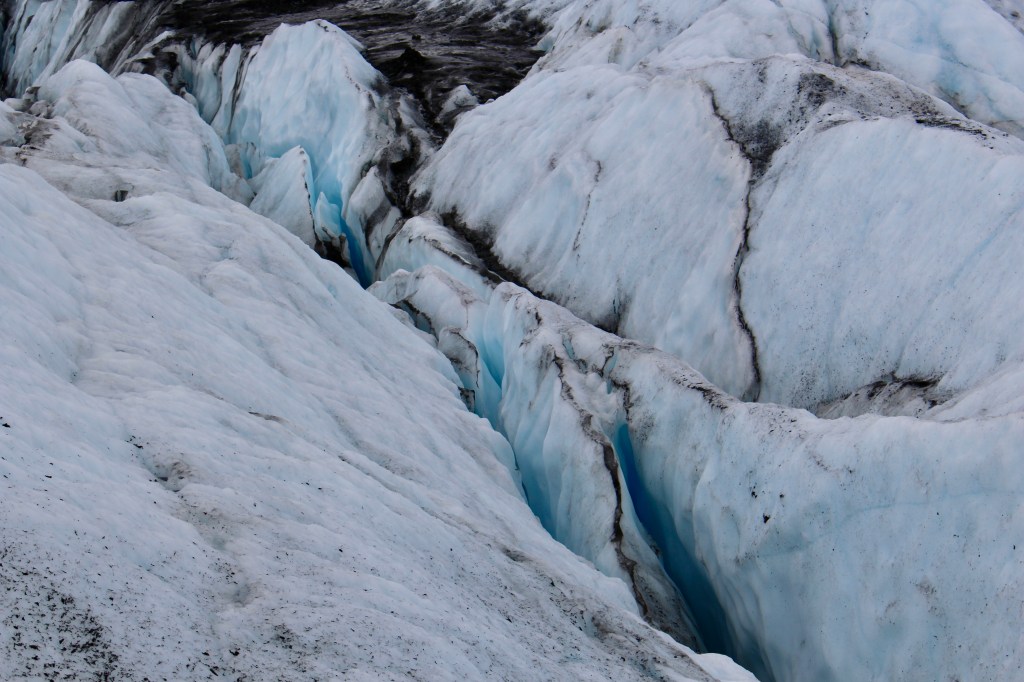
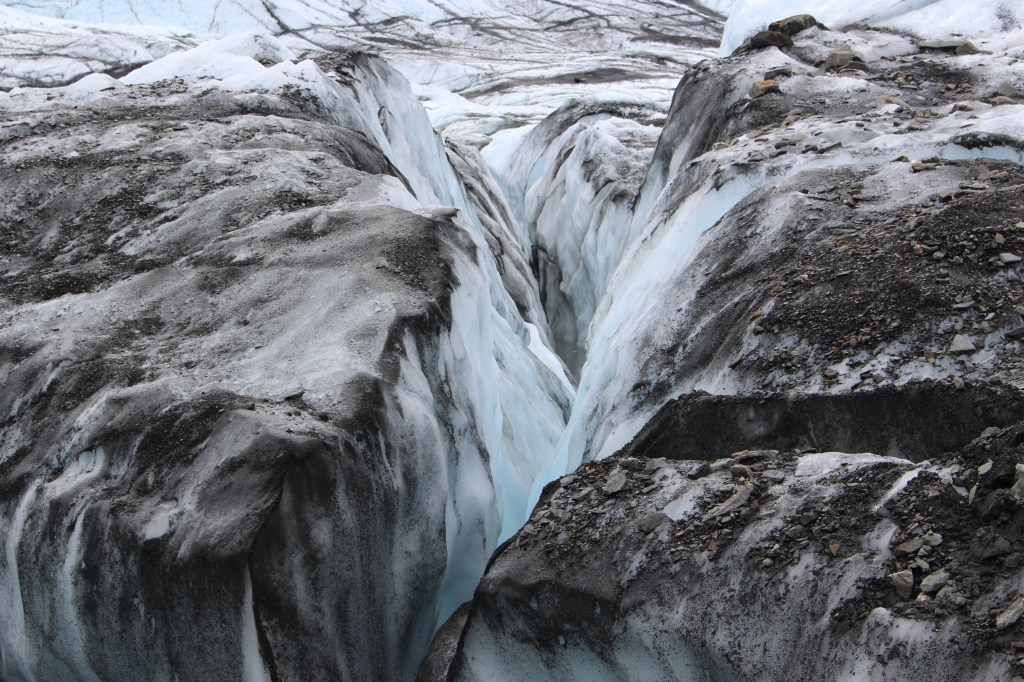
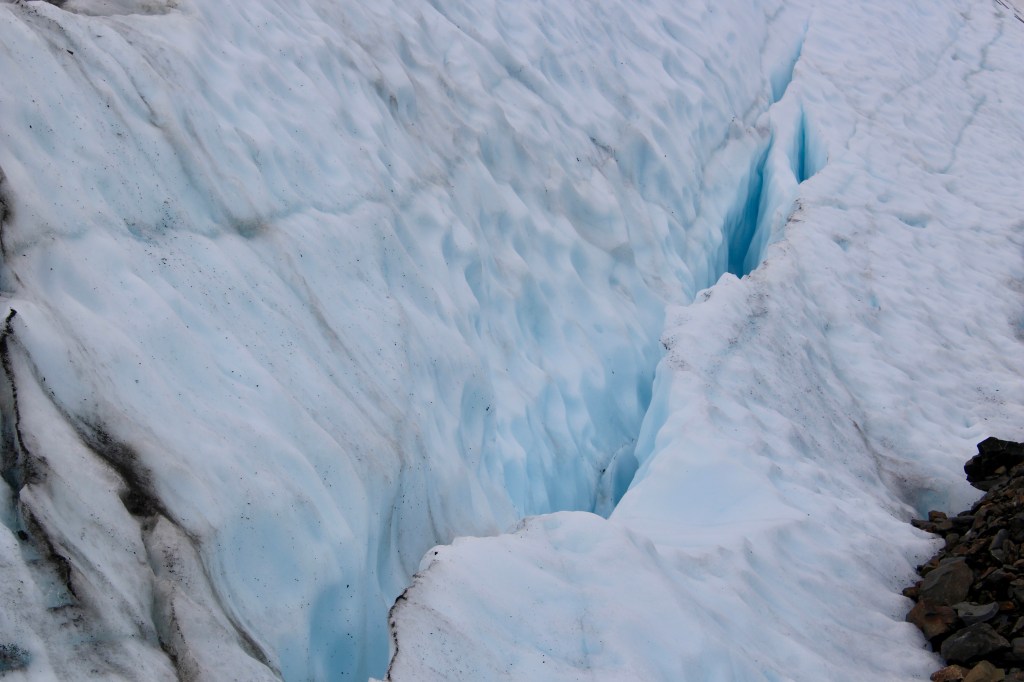
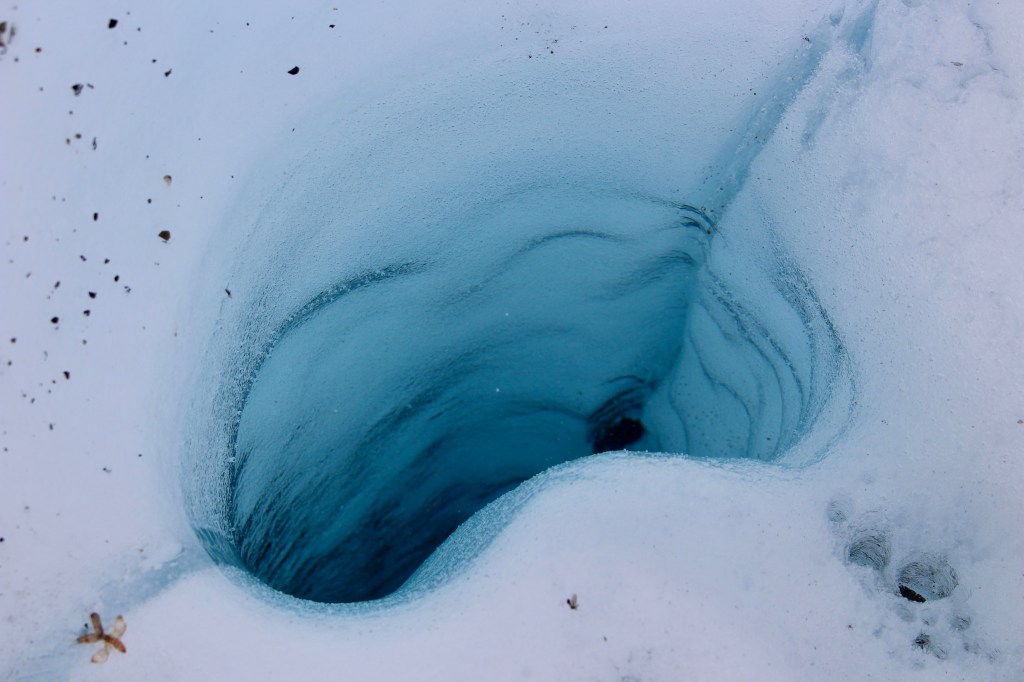
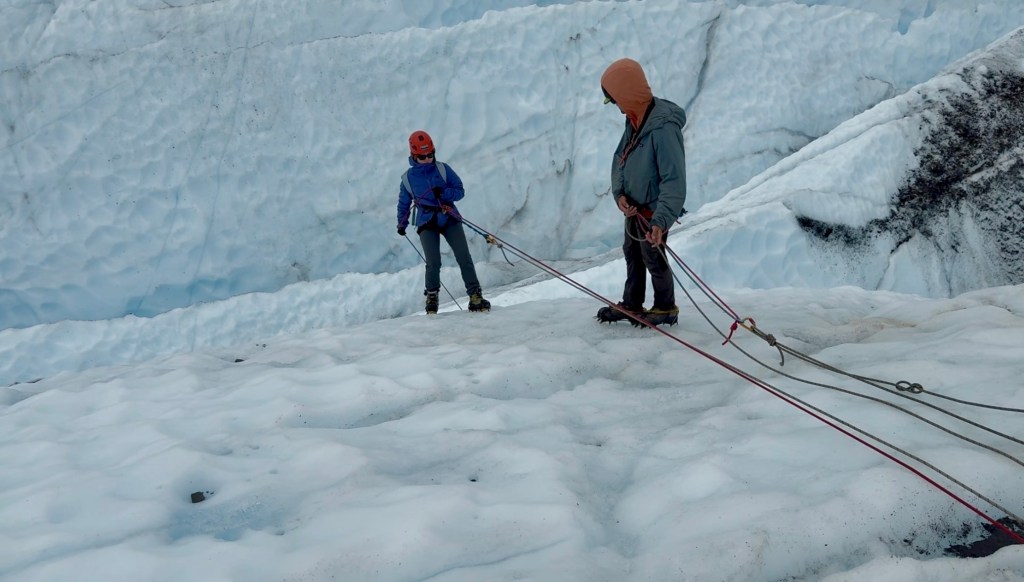
The most exciting part was glacier rappelling. It was my first time doing anything like that, and I was pretty nervous. I definitely needed some emotional support from our guide before I could convince myself to go down. But once I started, it was actually really fun.
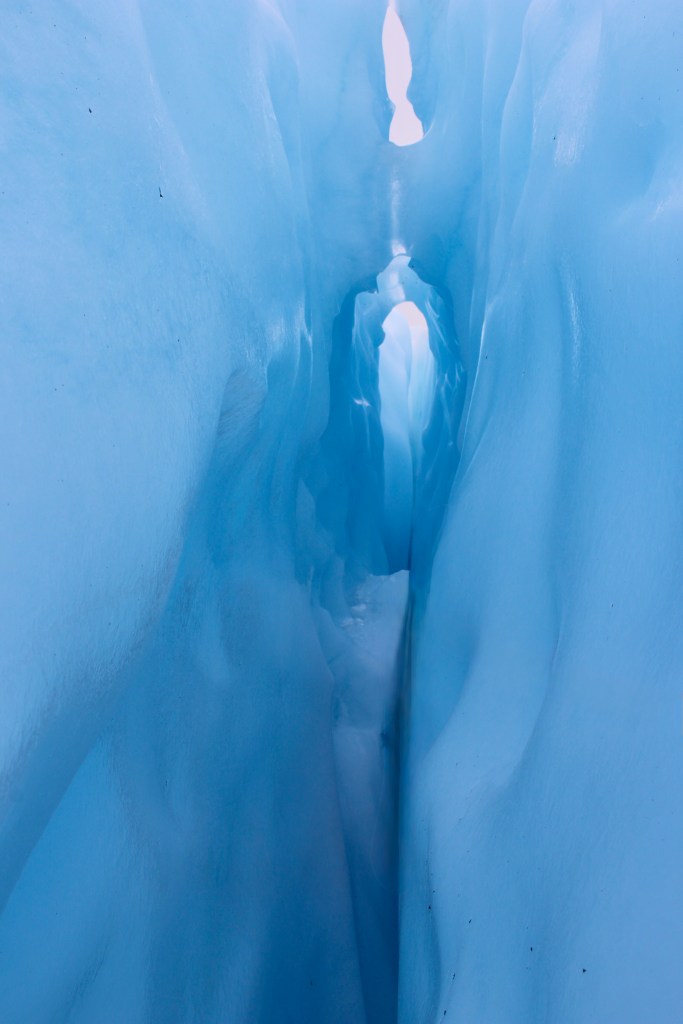
We also had a chance to walk inside a glacier crevasse. The blue color of the ice inside the crevasse was almost unreal. Our guides gave us enough time to take photos, but also kept the group moving and made sure everyone remained safe. This was probably one of the most unique activities of our Alaska trip.
09/07: Whittier and 26 Glacier Cruise
The next morning, we drove toward Whittier for our glacier cruise. Getting to Whittier is an experience by itself because the road passes through the Anton Anderson Memorial Tunnel. The tunnel was originally constructed during World War II to connect Whittier with the rest of Alaska and was later converted into a combined road and rail tunnel. Because traffic goes through the tunnel in scheduled directions, we had to time our drive carefully. We caught the 10:30 AM opening from Bear Valley and arrived in Whittier in time for our noon cruise.
There are several glacier cruises available in the south region of Alaska. We originally considered the Kenai Fjords cruises out of Seward, but after reading about motion sickness on longer open water trips, we decided to take the 26 Glacier Cruise from Whittier instead. The cruise was operated by Phillips Cruises & Tours and lasted about 5 hours. The route travels through Prince William Sound and passes numerous glaciers, which is where the name “26 Glacier Cruise” comes from.
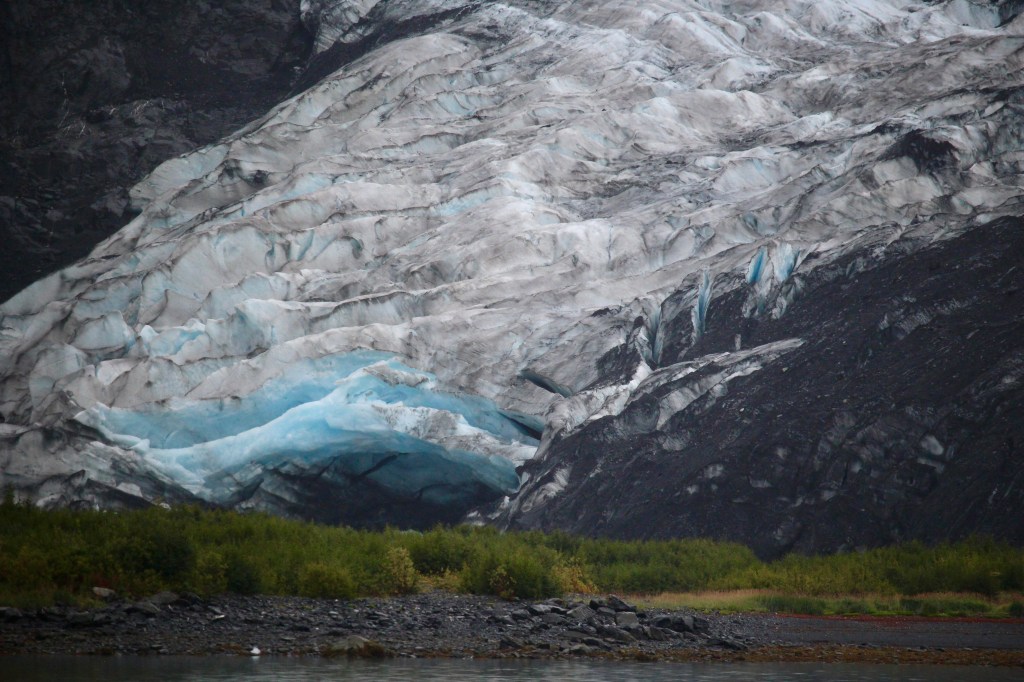
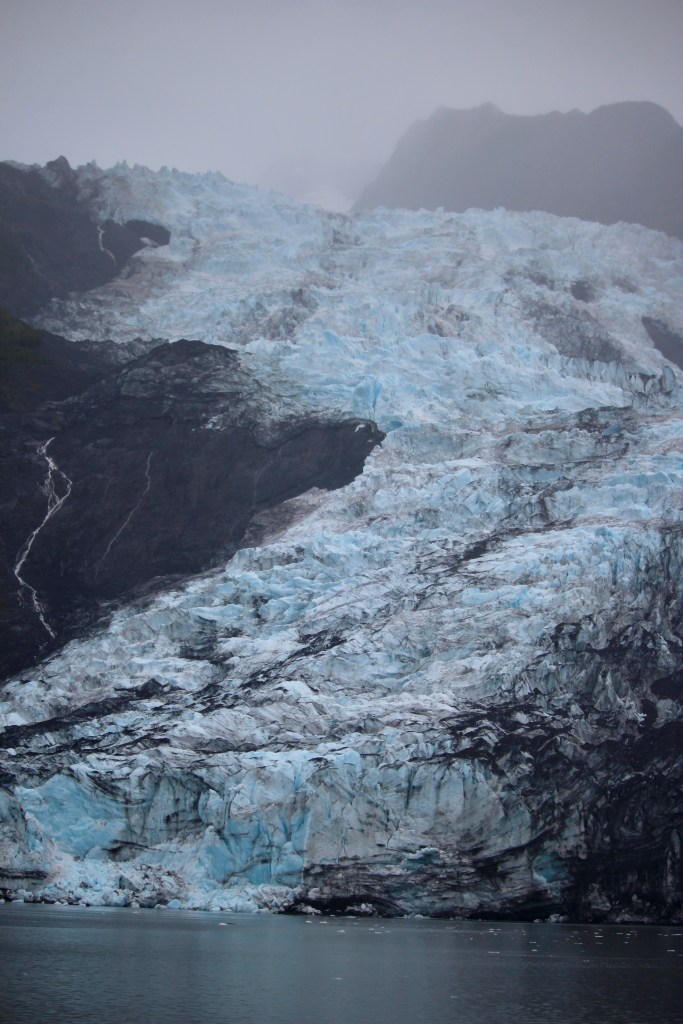
One thing that surprised me was how calm the water felt. I had expected much rougher conditions, but most of the trip was quite comfortable. The lunch was also better than I expected. We had bakery items, crackers, fruit snacks and Alaska salmon chowder. On a cold and windy day, a bowl of hot salmon chowder tasted especially good.
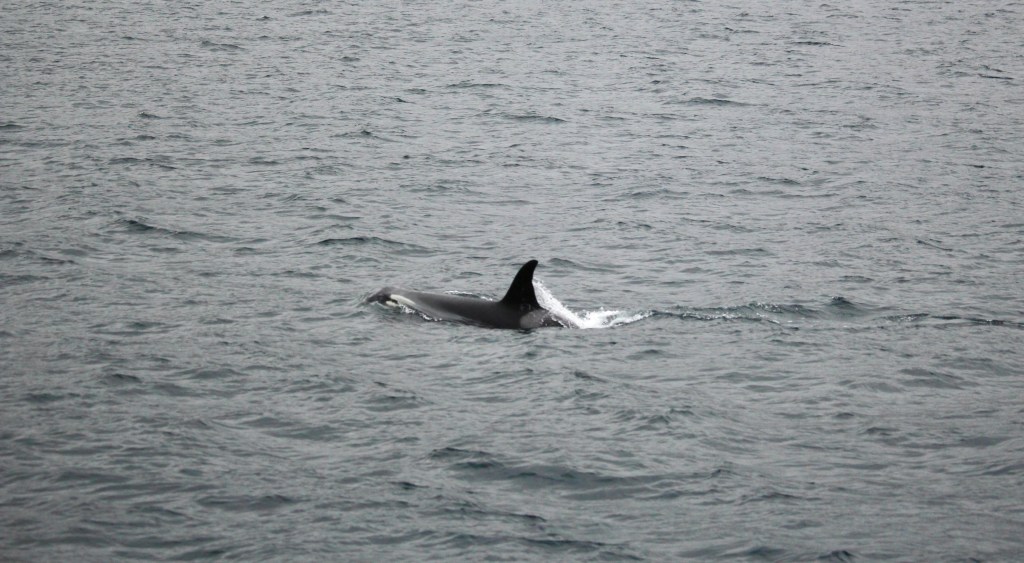
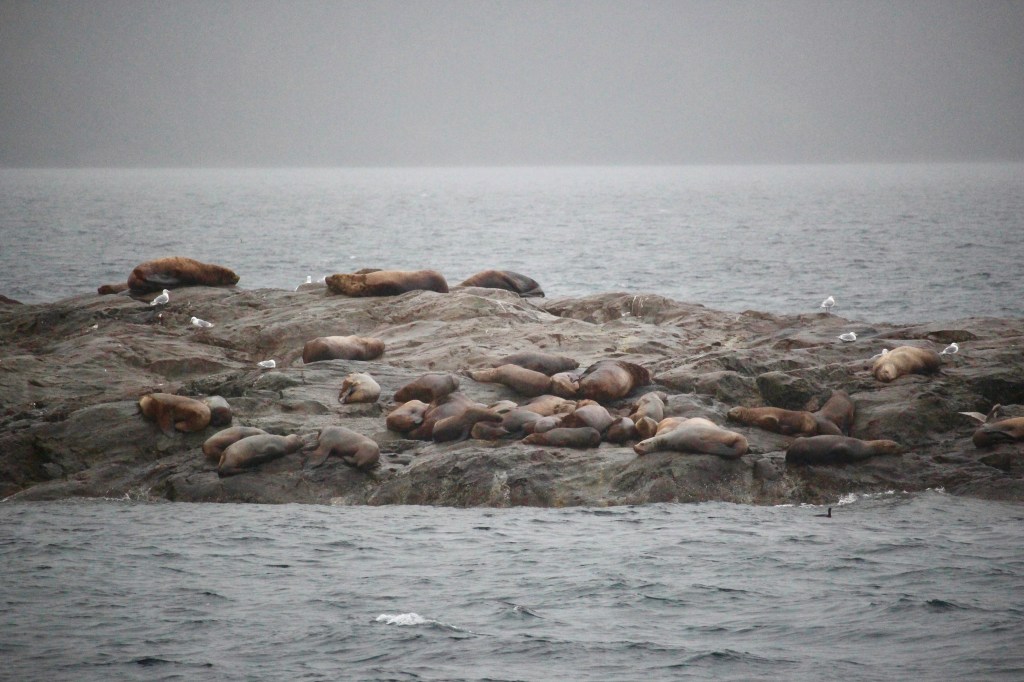
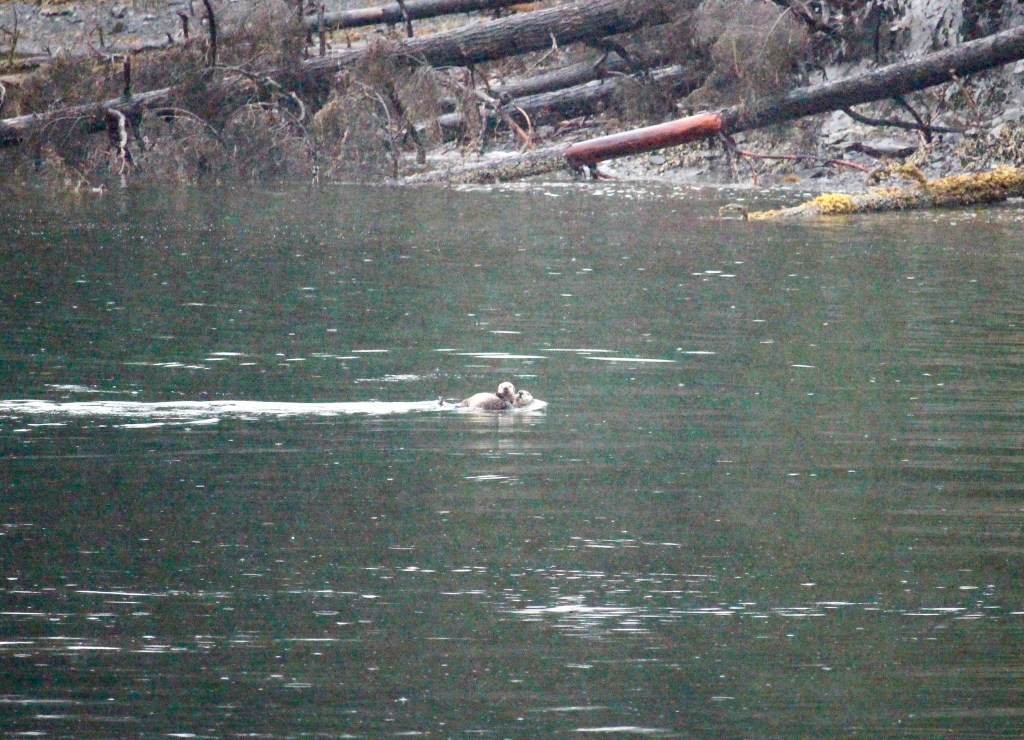
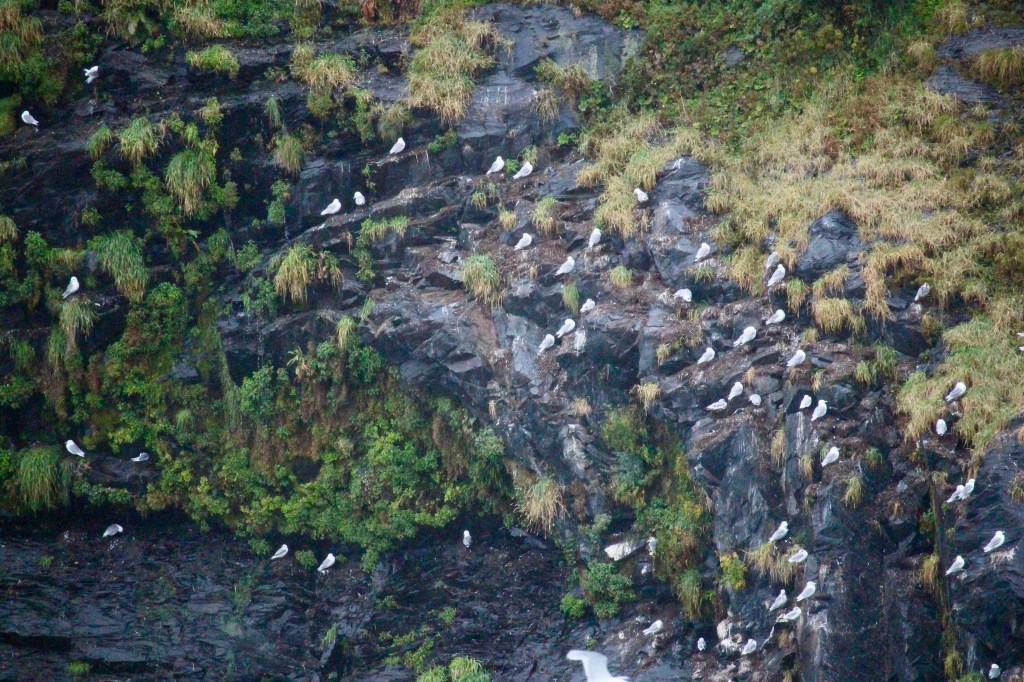
We saw quite a few animals: orcas, sea otters, sea lions, kittiwakes, and other seabirds. One thing I found particularly cute was how often the sea otters seemed to appear in pairs. I later learned that many of these pairs are mothers and pups. Young sea otters are not strong swimmers yet, so mothers may carry them on their bodies while swimming, resting and grooming. That explained the little floating pairs we kept seeing on the water.
The captain was also very considerate about wildlife viewing. The boat slowed down and repositioned itself so passengers on both sides had opportunities to see and photograph animals.
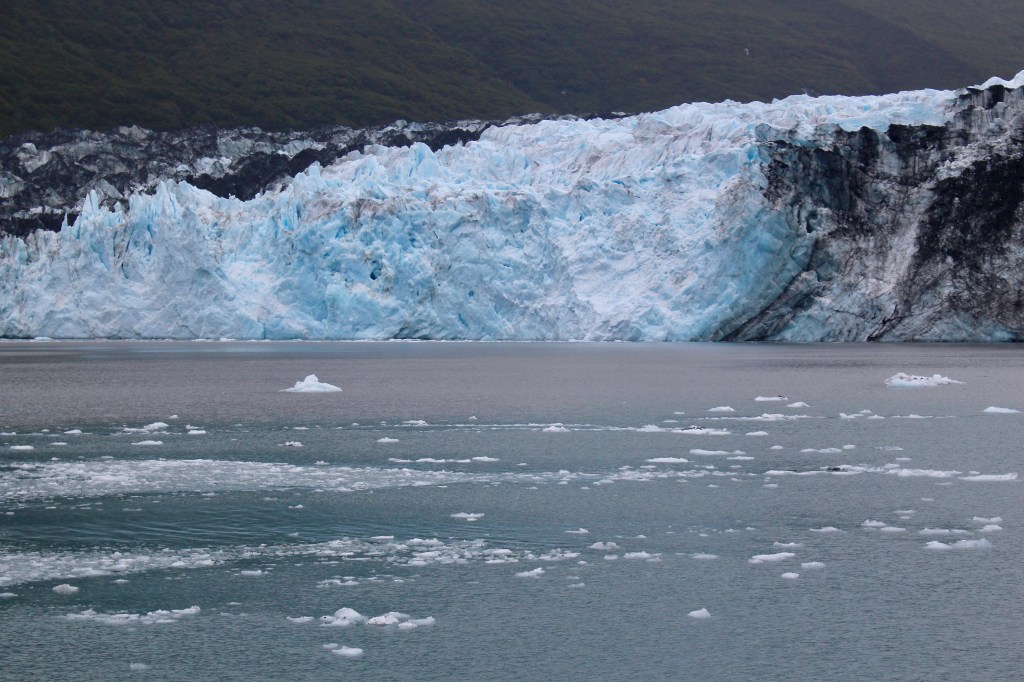
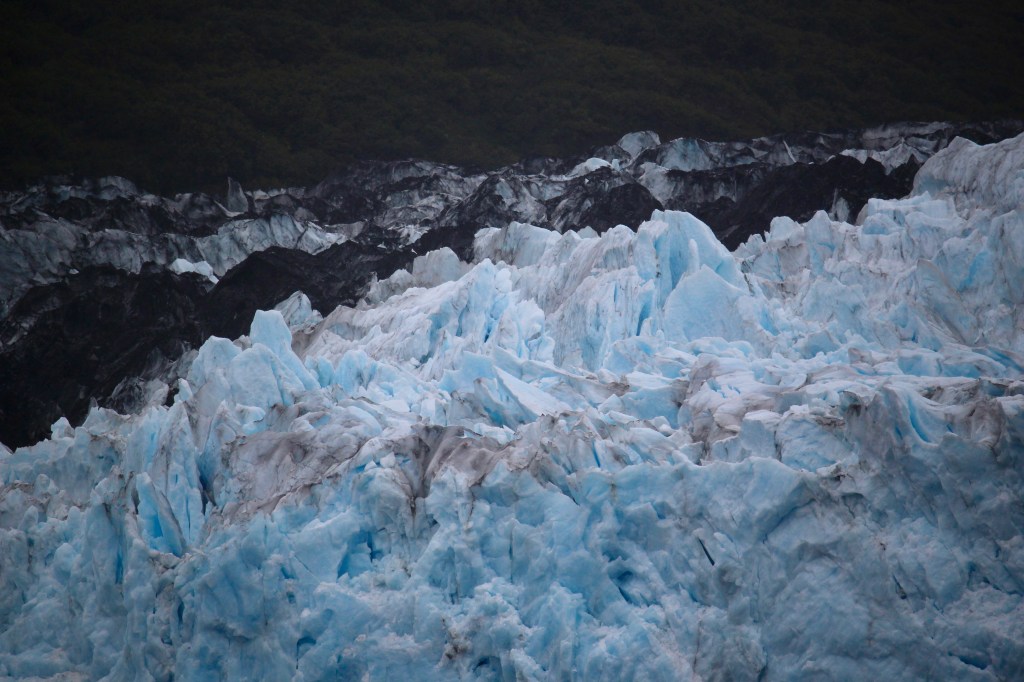
The final major glacier viewing area was Harvard Glacier. The atmosphere became much quieter as we approached the glacier. And then we witnessed glacier calving. Watching a huge piece of ice break away from a glacier and fall into the water is one of those moments where you realize how dynamic a glacier actually is.
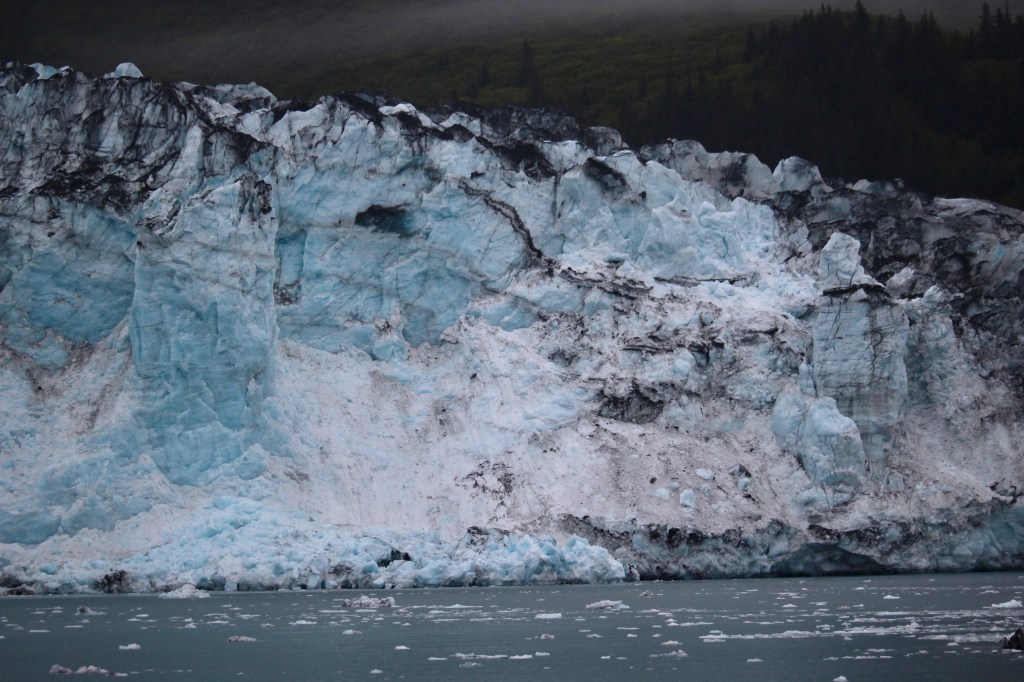
The crew also brought a piece of glacier ice on board and used it to make drinks. It was a fun ending to the cruise. After returning to Whittier, we continued south toward Seward.
09/08: Harding Icefield Trail
Our original plan for this day was a halibut fishing trip. Unfortunately, the fishing charter was cancelled because of wind and weather, so it was moved to Thursday. That left us with an unexpected free day. So we decided to do something ambitious: Harding Icefield Trail.
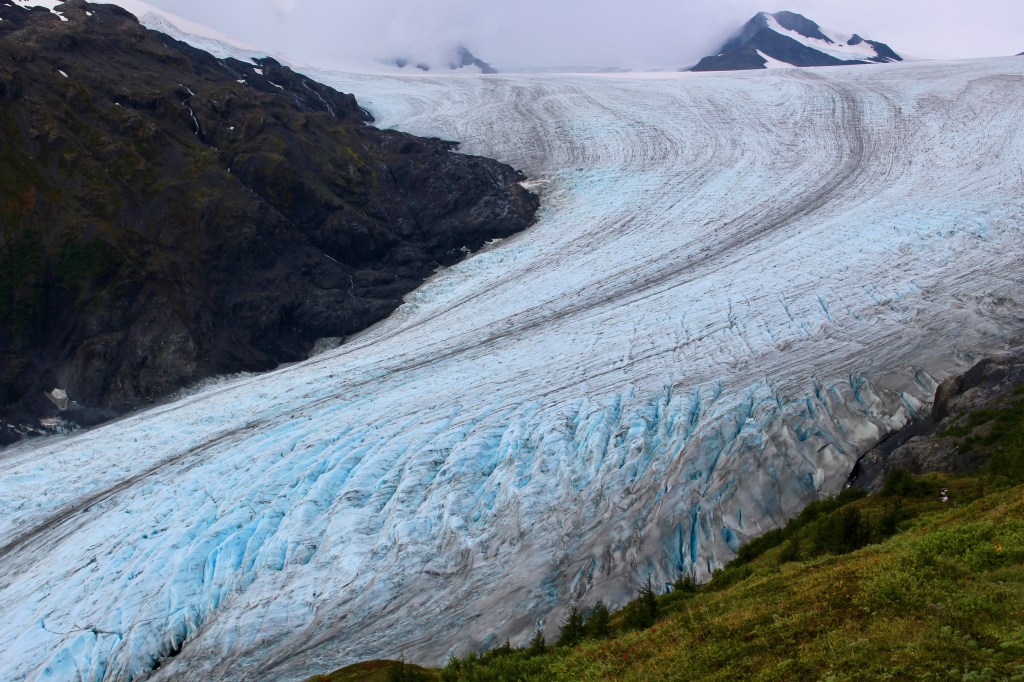
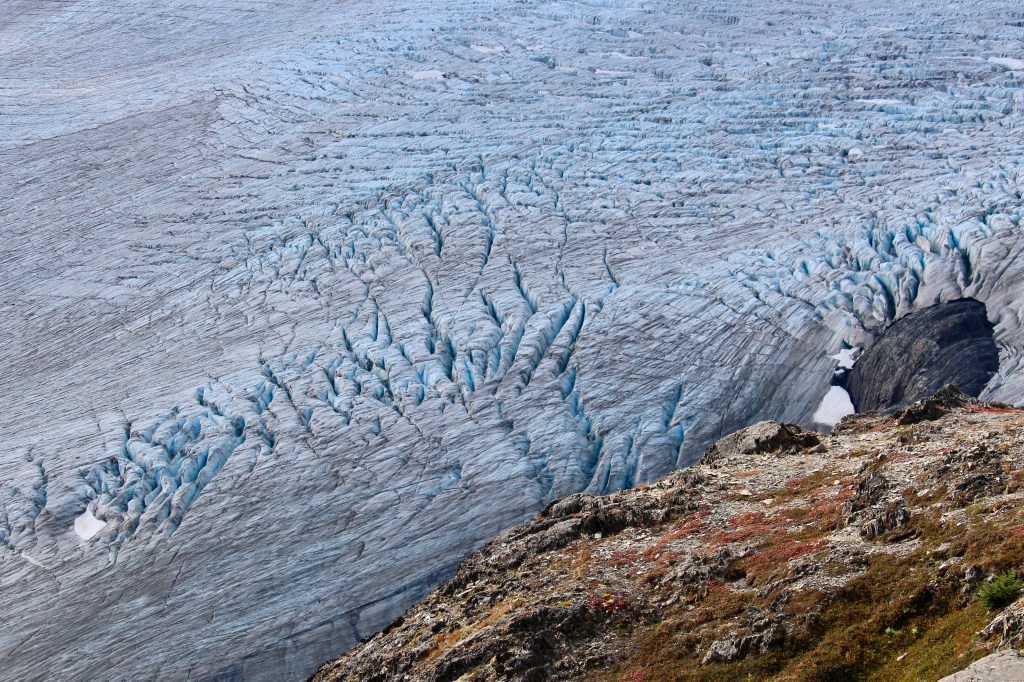
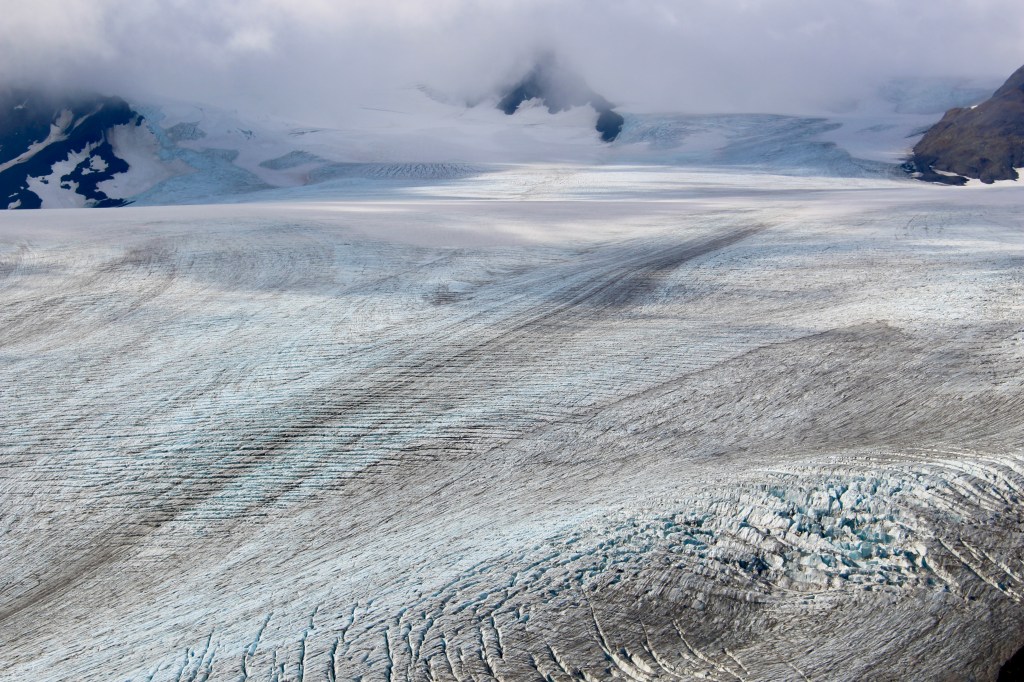
We drove to the Exit Glacier area of Kenai Fjords National Park and started from the Exit Glacier Nature Center. Exit Glacier is particularly interesting because it is the only part of Kenai Fjords National Park accessible by road. There are several trails in the area, including shorter options such as the Glacier View Loop. We chose the hardest option. The Harding Icefield Trail is no joke. The trail climbs approximately 3,500 feet in just 4.1 miles. NPS describes it as a strenuous hike and recommends allowing at least 6 – 8 hours for the round trip.
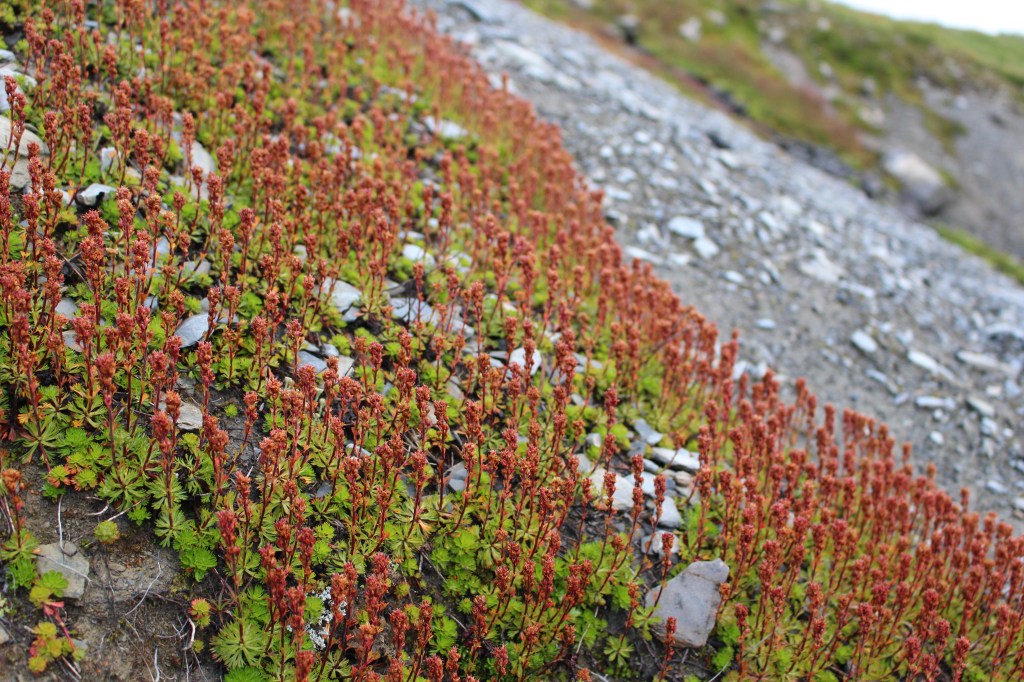
There are several natural milestones along the way, including Marmot Meadows and Top of the Cliffs. The higher we climbed, the more the landscape changed. We started in forest, moved through meadows, and eventually climbed above the tree line. At the top, the landscape opened into a huge field of ice and snow.
It was one of those views that makes you forget how tired you are. We made it all the way to the end. And yes, it was very strenuous. My knees definitely complained afterward, especially during the descent. In hindsight, I would say you absolutely do not have to hike the entire trail to enjoy it. Even hiking partway up gives you impressive views of Exit Glacier and the surrounding valley. But if you are physically prepared for a long, steep hike, reaching the top is extremely rewarding.
09/09: Alaska SeaLife Center
Our plan for this day was one of the activities I was most excited about: Iceberg kayaking at Bear Glacier. Unfortunately, the weather had other plans. The tour was cancelled because of wind. And because we had to leave Alaska on Friday, there was no way to move it to another day. I was honestly pretty disappointed. But this turned out to be another one of those travel days where an unexpected cancellation created room for something else.
We started the morning with breakfast at Resurrect Art & Coffee in Seward. The cafe opens early, which was convenient for us. The building itself was interesting because it was originally a church and was later transformed into a cafe and art space. I ordered the Nutty Irishman, a hazelnut flavored latte, which I really liked. The lavender lemon cake was also good, although the lavender flavor was a little too strong for me.
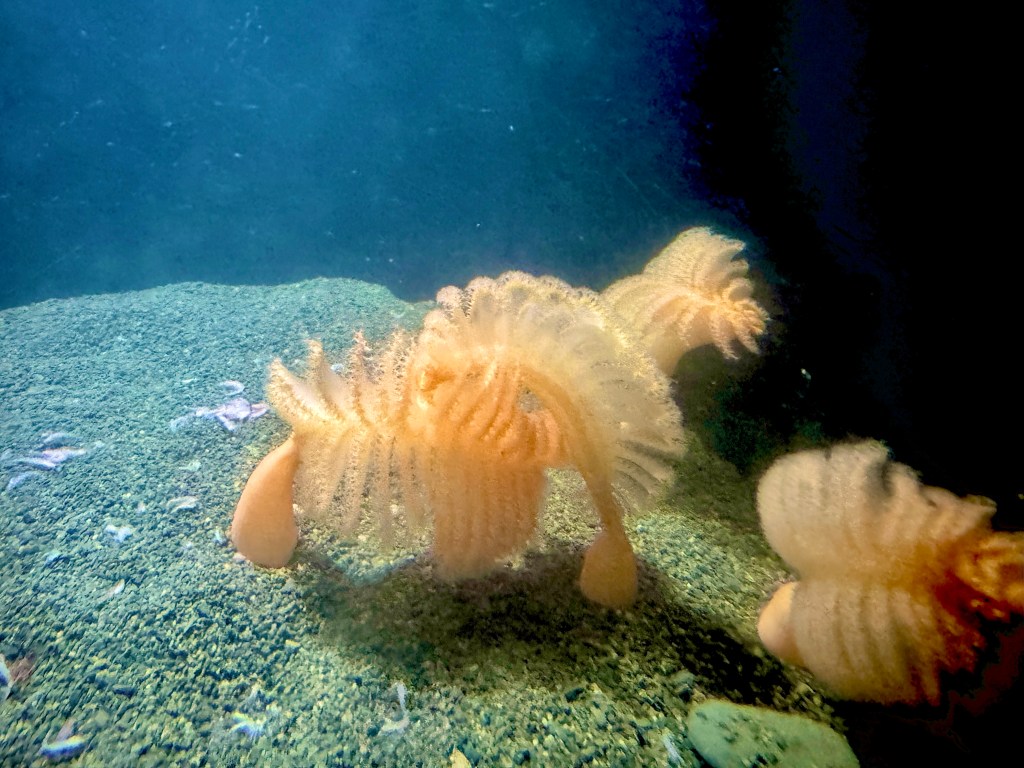
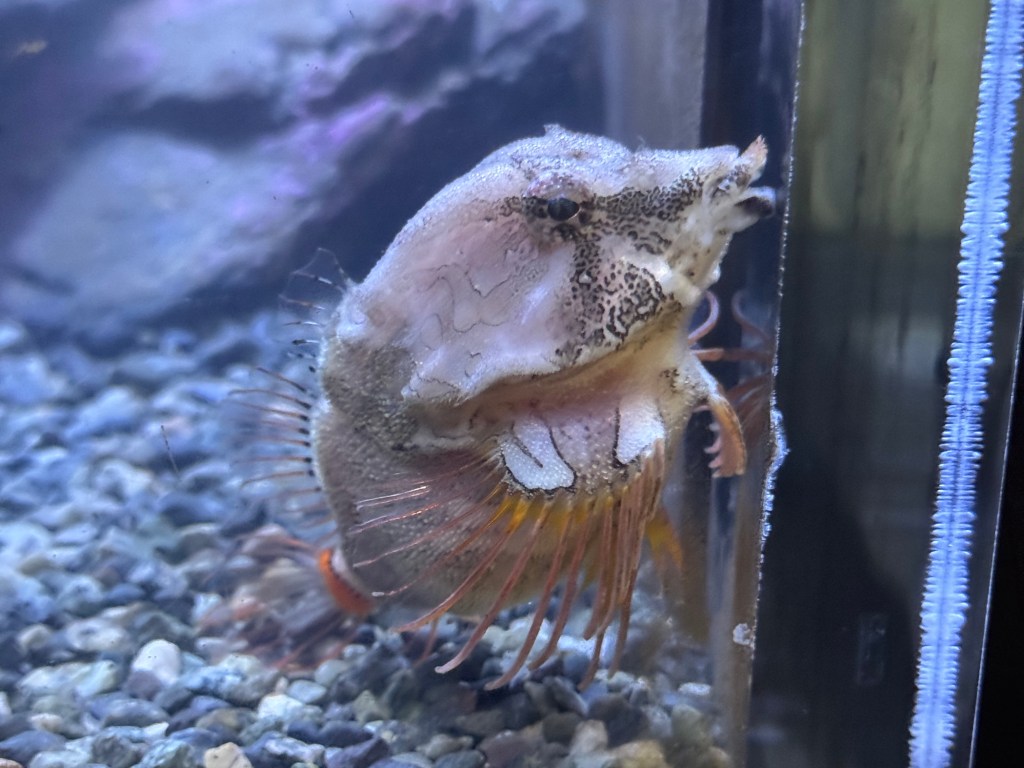
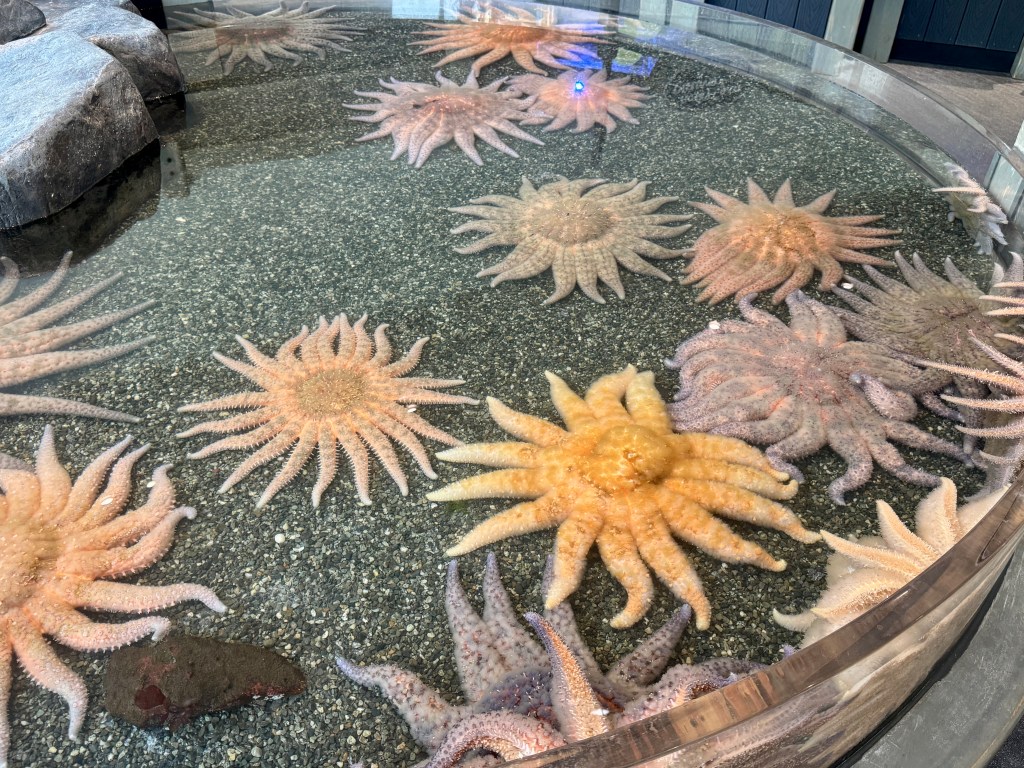
Then we visited the Alaska SeaLife Center. I honestly expected a typical aquarium. It was much more interesting than that. The SeaLife Center is better understood as a combination of marine animal rescue, rehabilitation, research and education. I followed the free audio guide and ended up spending much longer there than expected.
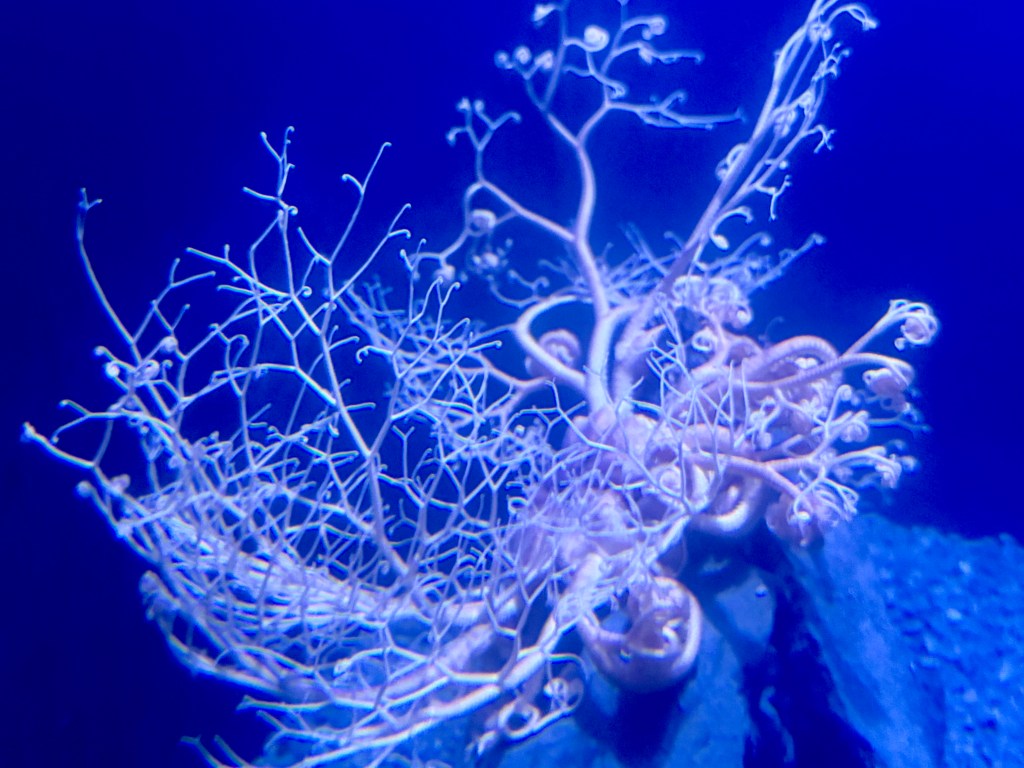
Alaska borders the Pacific Ocean and the Arctic Ocean and is surrounded by several major seas and coastal ecosystems. The Bering Sea, for example, sits between Alaska and Russia. The two countries are surprisingly close at their nearest points – only about 50 miles apart across the Bering Strait.
The center also explained how Alaska’s seafood industry is closely connected to seasonal cycles. Many Alaska seafood products are harvested during specific seasons and quickly frozen to preserve quality.
One of the more sobering exhibits covered the 1989 Exxon Valdez oil spill. The tanker left Valdez and struck reef, releasing 11 millions of gallons of crude oil into Prince William Sound. The spill had a devastating effect on marine and coastal ecosystems. The long term environmental consequences are still being studied, and monitoring programs were established to understand how ecosystems recover from such a large disturbance.
One of the animals I became particularly interested in was the eider. The SeaLife Center introduced us to both Steller’s eider and spectacled eider, two highly specialized Arctic sea ducks. Both species face significant conservation challenges. The spectacled eider is especially interesting because it can dive surprisingly deep to search for food. The Steller’s eider is the smallest of the eider species and is also an exceptionally fast flyer.
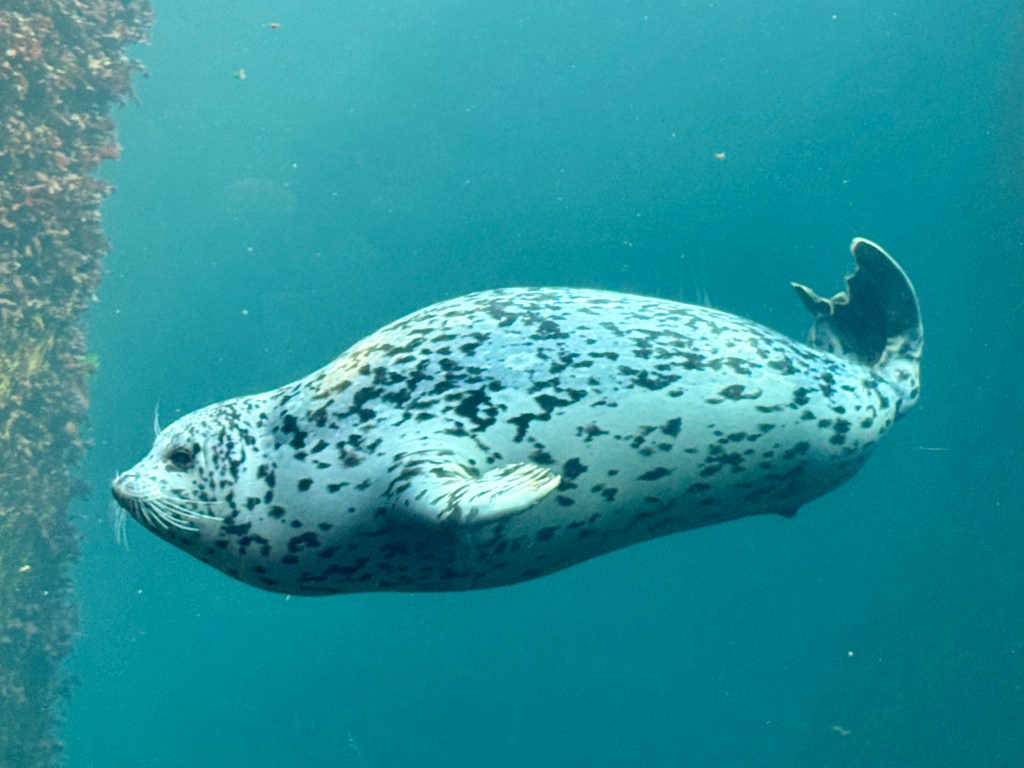
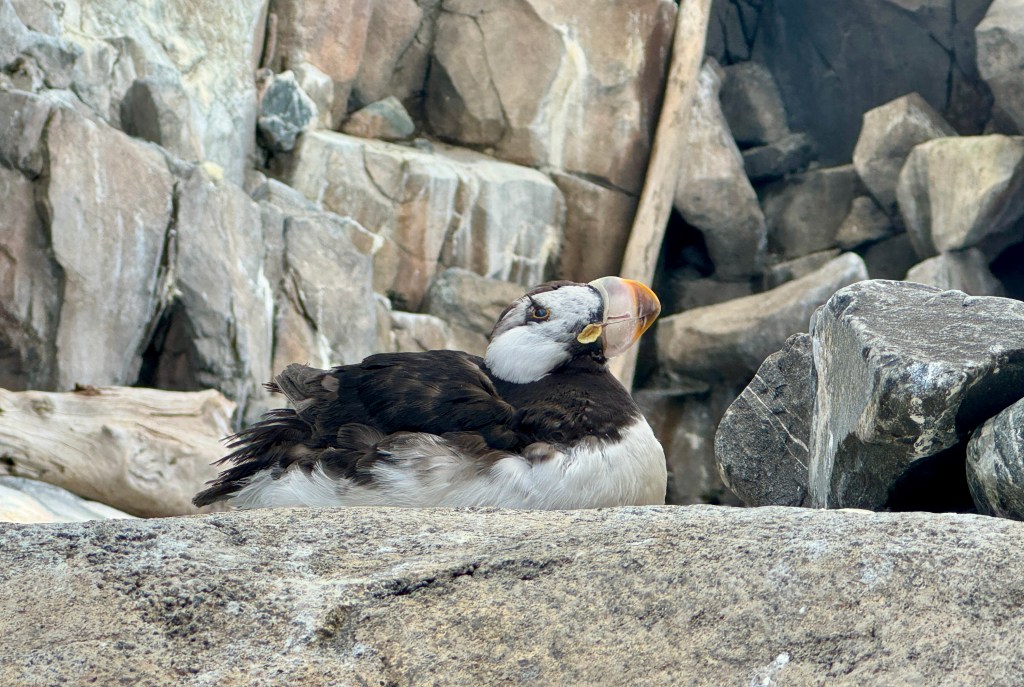
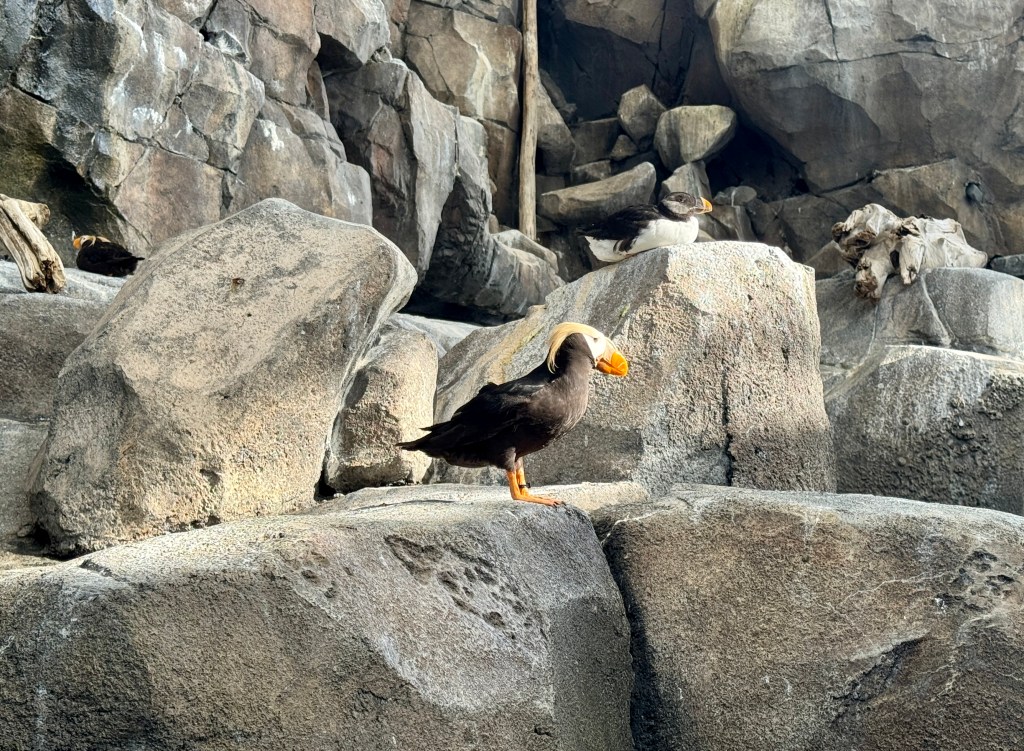
The SeaLife Center also had harbor seals and puffins. I especially enjoyed comparing tufted puffins and horned puffins. They look similar at first, but once you know what to look for, their facial markings make them surprisingly easy to distinguish.
09/10: Deep Sea Fishing – Halibut & Rockfish
Finally, we got our fishing day. We booked a combo halibut and rockfish trip with J-Dock. The trip lasted about 12 hours.
Our captain Andrew drove the boat for roughly two hours to reach a fishing spot where we hoped to catch larger halibut. Unfortunately, we didn’t have much luck there. The largest halibut we caught at that location was only around 25 inches. So we moved.
The second location was much better. Almost everyone on the boat eventually caught their halibut limit. Halibut fishing in Alaska is interesting because the fish can look deceptively flat and harmless when you first see them. Then you try to lift one. They are incredibly powerful fish.
After we had spent most of the day targeting halibut, the captain moved us to another area and we started fishing for rockfish. This part was much easier. The boat drifted over the fishing area and almost everyone started catching fish. We probably spent only about an hour on rockfish, but it was one of the most productive hours of the trip.
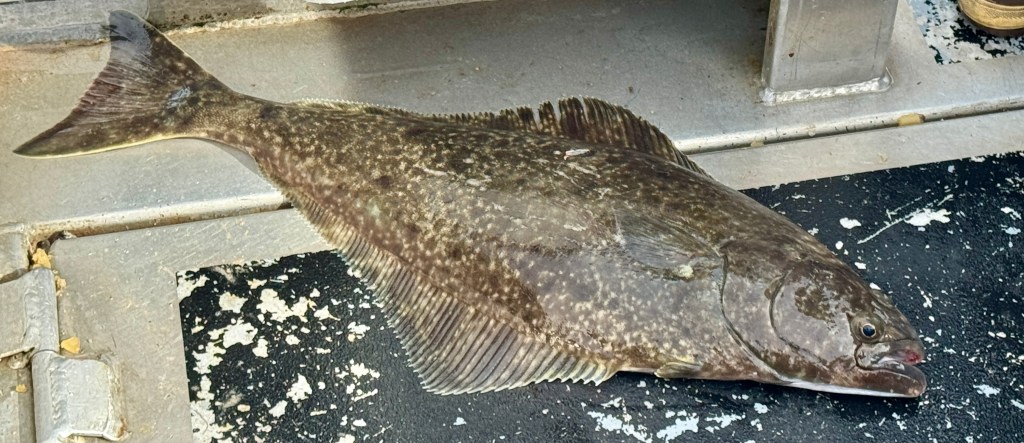
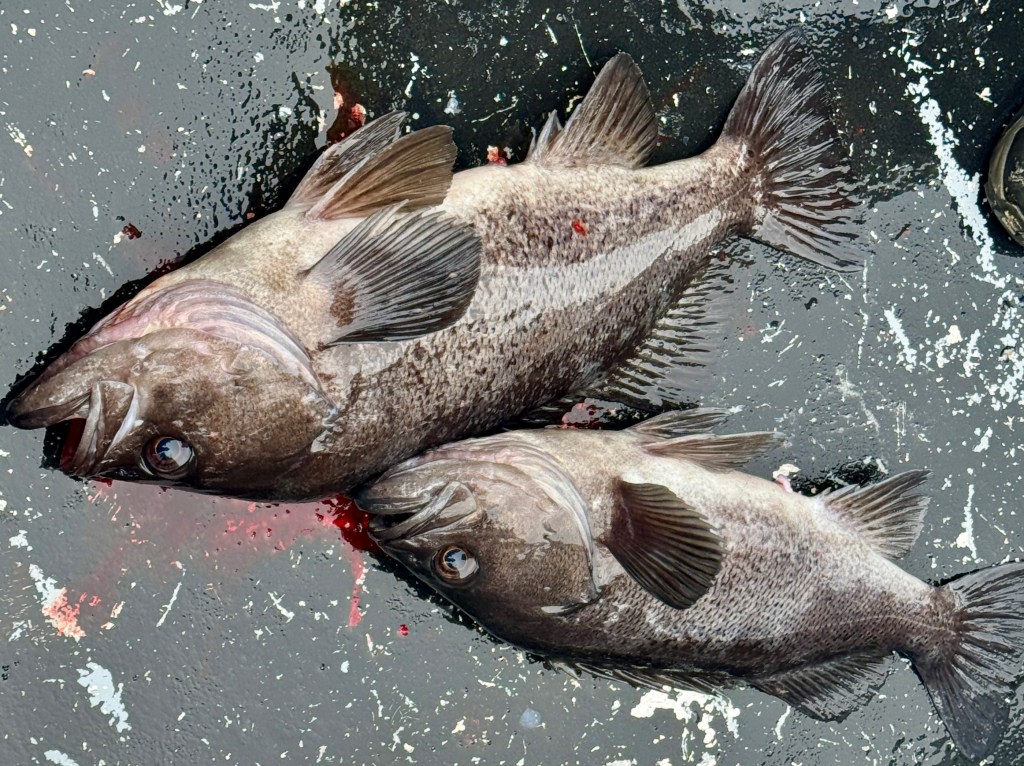
I was a little worried about this trip because I know I can get motion sick. Since we were going to be on the boat for around 12 hours, I talked with my doctor beforehand and used a prescribed motion sickness patch. It worked extremely well for me. The wind was strong and the ocean was definitely moving, but I never developed the motion sickness I had been worried about. That made a huge difference because I could actually enjoy the fishing rather than spending half the day trying not to get sick.
Once everyone had caught their limits, we headed back to Seward. J-Dock also offered fish processing, freezing, packing and shipping services. Since we were flying home the next day, we decided to ship the fish instead of trying to carry it ourselves. It wasn’t cheap, but it was still much more economical than buying the same amount of high quality halibut and rockfish at retail prices. And, of course, there is something pretty satisfying about getting a box of fish shipped home after spending an entire day catching it yourself.
The End
We left with a much better understanding of the place itself. And I still feel like we only saw a very small corner of Alaska. There is so much more to explore, and we will definitely come back one day to experience its nature from a completely different perspective in winter.
 yongjiasong.com